Allen Lane had already decided that he wanted an animal logo for his revolutionary new publishing house, and according to company legend, Lane’s secretary suggested ‘Penguin’ as a “dignified, but flippant” name for the new company. Edward Young, a 21-year-old office junior, was immediately dispatched to London Zoo to sketch the bird in every possible pose for the rest of the day. [1]
The first Penguin paperbacks appeared on 30 July 1935, and they changed the world of books forever.
The idea came to a young publisher, Allen Lane, in 1934. Returning to London after a weekend at the home of Agatha Christie, he found himself waiting at Exeter railway station. Looking for something to read, he was disappointed by the poor-quality and overpriced books on sale. Surely, he thought, good books should be affordable, attractive and available to everyone.
Within a year he had founded Penguin Books. It was a revolutionary concept: quality paperbacks sold for just sixpence and available not only in bookshops but also in Woolworths and other high-street stores. The first ten titles included works by Agatha Christie and Ernest Hemingway, and readers embraced them enthusiastically. In its first year alone, Penguin sold an astonishing three million books.
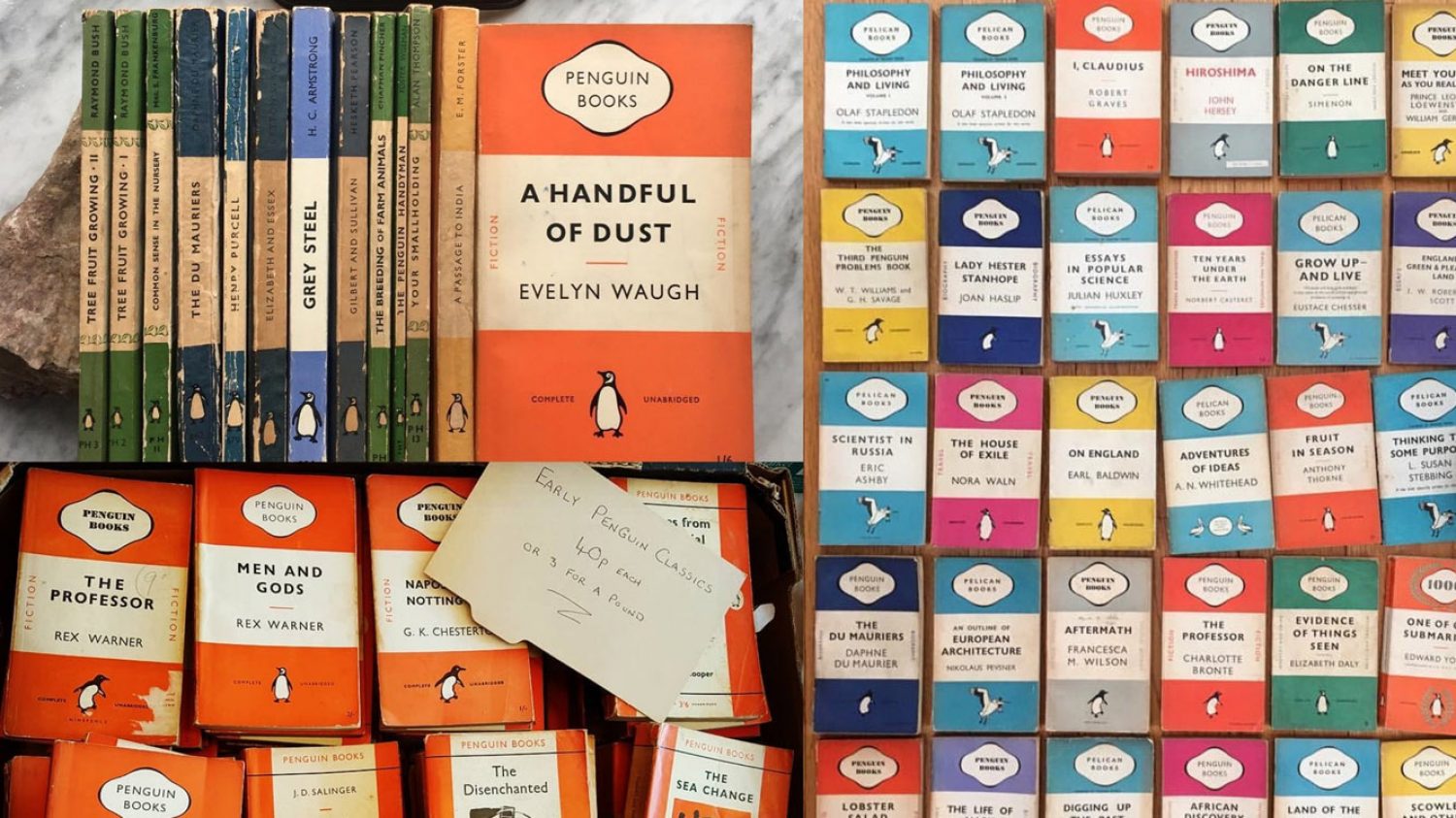
The early paperbacks were instantly recognisable through their simple colour-coding system: orange for fiction, green for crime and dark blue for biography. Before long, other colours were added, creating a scheme that survived for decades and can still be spotted on the shelves of second-hand bookshops today.
Penguin’s success transformed publishing by bringing both fiction and non-fiction to a mass audience. The company is now part of Penguin Random House, formed in 2013 through a merger with the American publisher Random House, but Allen Lane’s original vision remains the same: good books for everyone.
Selected links for relevant websites, books, movies, videos, and more. Some of these links lead to protected content on this website, learn more about that here.