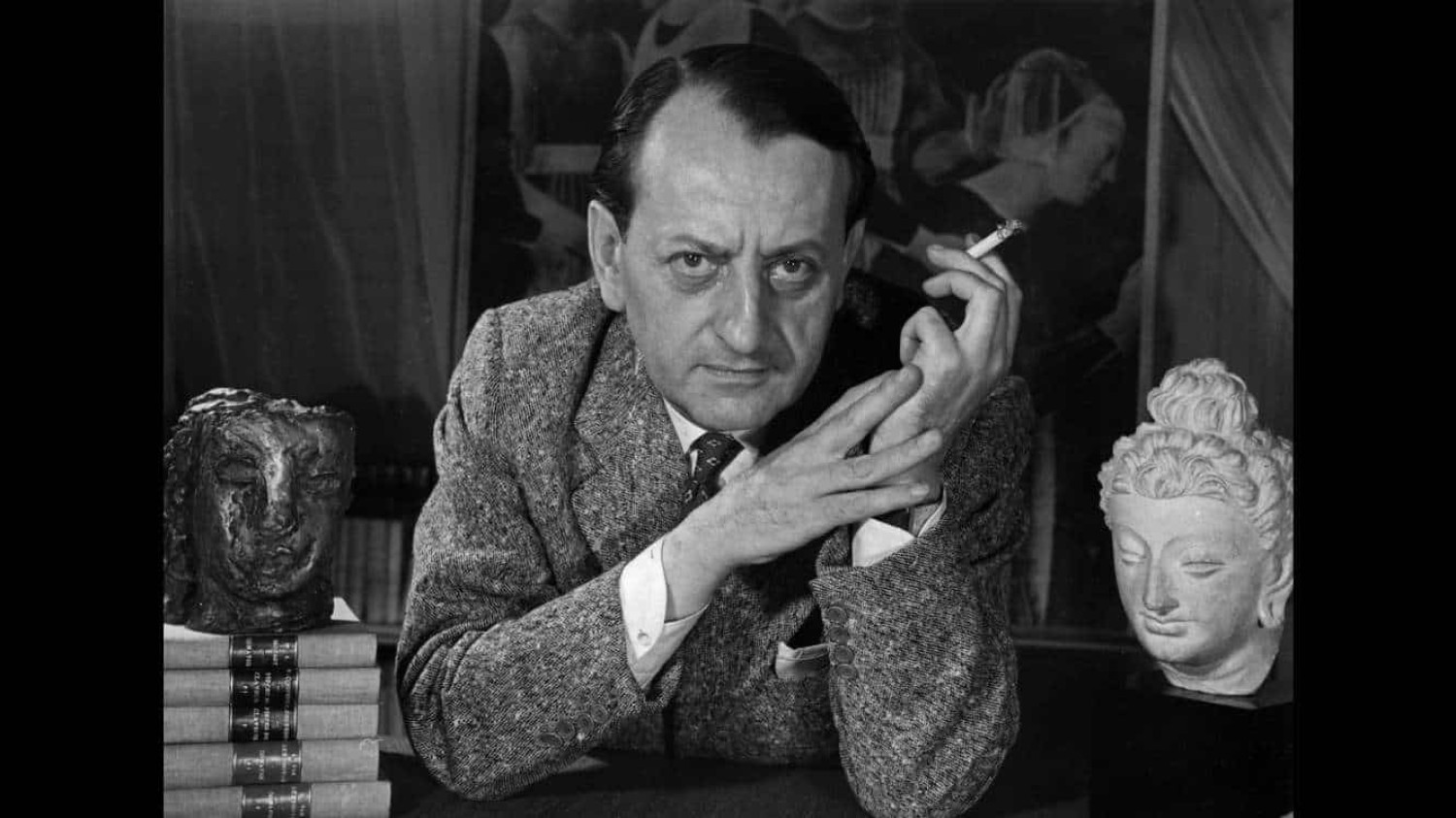
In 1920 André Malraux’s first published work, an article called “The Origins of Cubist Poetry”, was published in a magazine named Action. [1]
Born in Paris on 3 November 1901, André Malraux grew up in circumstances that were intellectually stimulating, though personally unsettled. Following his parents’ separation, he was raised by his mother and grandmother, and from an early age developed a serious attachment to books. Literature, art, and history became central to his education, much of which was self-directed.
Malraux did not attend university, but instead immersed himself in the cultural life of Paris. He spent long hours in libraries and bookshops, absorbing ideas and forming connections within avant-garde literary circles. His early involvement in publishing and criticism revealed both confidence and intellectual ambition, as well as a developing belief in the enduring significance of art.
In the 1920s, he travelled to Southeast Asia, an experience that proved formative. Although his initial interest lay in archaeology, the political tensions he encountered left a deeper impression. These experiences informed his early novels, including Les Conquérants (The Conquerors), which marked the emergence of his distinctive literary voice.
His later success was secured with La Condition humaine (Man’s Fate), a work of philosophical depth and narrative force. In subsequent writings, including La Voix du silence (The Voices of Silence), he continued to explore the meaning of art and human destiny across civilisations.