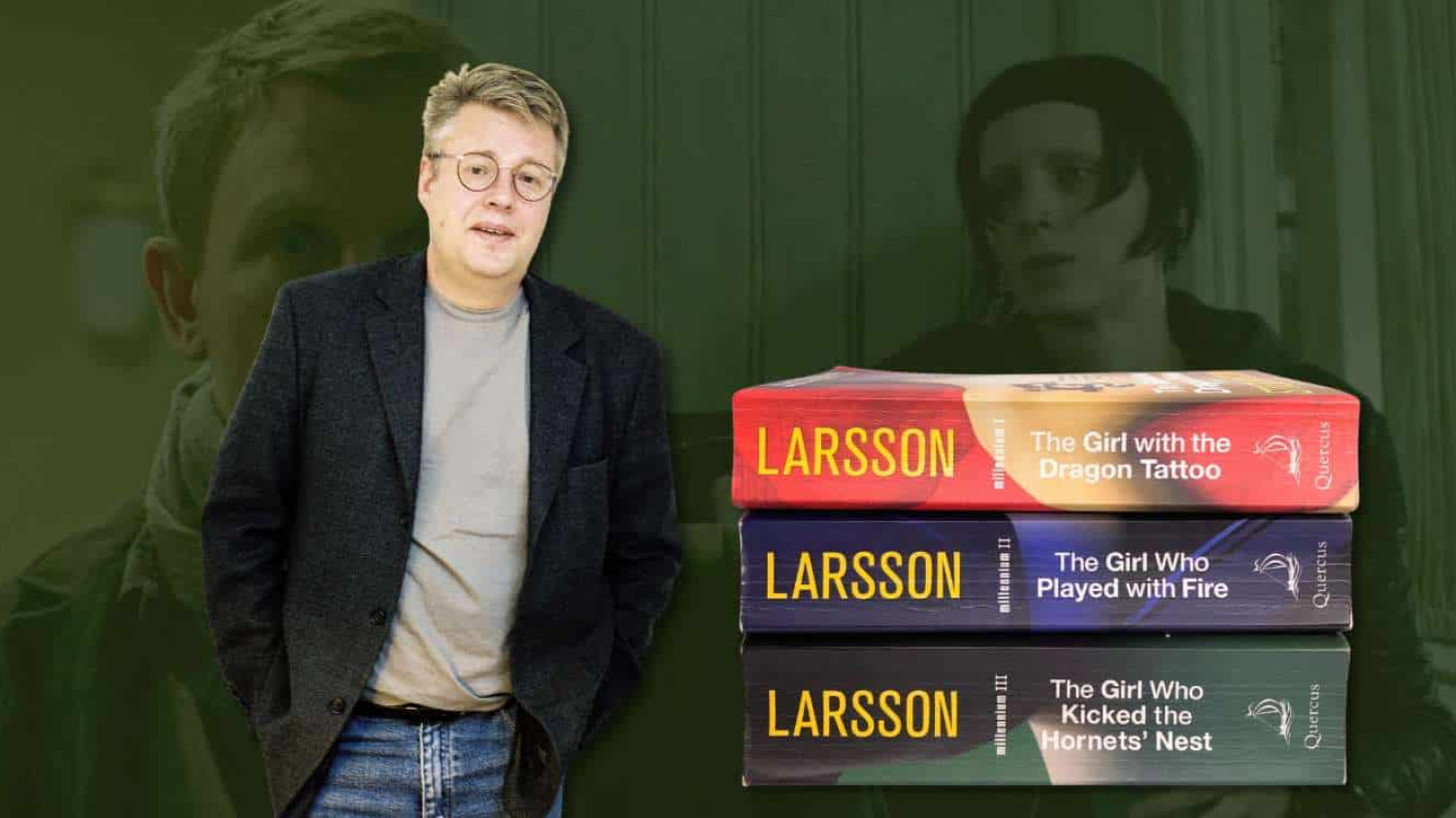
The Millennium series, first conceived by Stieg Larsson, has now been published in more than 50 countries and has sold in excess of 100 million copies worldwide. [1]
On 9 November 2004, Swedish author and journalist Stieg Larsson died suddenly in Stockholm at the age of fifty, after suffering a massive heart attack. The circumstances were distressingly ordinary: the lift in his office building was out of order, and he climbed seven flights of stairs before collapsing. Friends later reflected that his intense working habits—sustained by remarkable quantities of coffee and cigarettes—had taken a heavy toll. There was, perhaps, an echo here of his own character Mikael Blomkvist, similarly driven and indefatigable.
The literary career of Stieg Larsson is one of those rare stories in history where success arrives only after the author himself has departed. For many years, Larsson was known as a committed and courageous journalist. As co-founder of the magazine Expo, he devoted his working life to investigating and exposing extremist political movements in Sweden. It was serious, often dangerous work.
Alongside this demanding career, however, Larsson was quietly writing fiction. In the early 2000s, he completed three novels, forming what would become the Millennium trilogy, beginning with The Girl with the Dragon Tattoo. These manuscripts were delivered to his publisher shortly before his death.
The success that followed was remarkable. Larsson’s novels became an international sensation, translated into dozens of languages and selling many millions of copies worldwide. He was the second-best-selling fiction author in the world for 2008, owing to the success of the English translation of The Girl with the Dragon Tattoo, and by March 2015, his series had sold 80 million copies worldwide. The trilogy was adapted into three motion pictures. Yet, Stieg Larsson had imagined a far larger literary achievement—“ten books,” he once said. Other writers have been commissioned to continue the series, which had eight novels as of December 2025.
Because Larsson had not made a will, his estate passed under Swedish law to his father and brother, rather than to his longtime partner, Eva Gabrielsson, with whom he had shared over three decades, sparking a legal challenge over the literary rights to Larsson’s work.
Stieg Larsson is interred at the Högalid Church cemetery in the district of Södermalm in Stockholm. His legacy endures through the Stieg Larsson Foundation, established in 2012 by his family to support freedom of speech, anti-racist work, and ethical journalism.
Selected links for relevant websites, books, movies, videos, and more. Some of these links may lead to protected content on this website, learn more about that here.