In the Shadow of the Cathedral
Jane Austen’s Last Days

I’ve just come back from leading a literary tour in England, and one of the most special days was our visit to the house where Jane Austen spent her final weeks. My group and I stood in front of the narrow frontage of 8 College Street in Winchester, a modest lodging-house just a short stroll from the Cathedral and right beside Winchester College, where several of her nephews were educated.
There’s a plaque above the door to mark the spot, but of course the house itself tells a much greater story—the last chapter of Jane Austen’s life.
Today the property is owned by Winchester College. For many years it has been home to teachers at the school, but in this year marking the 250th anniversary of Jane Austen’s birth, the College has decided to open it to special groups and, on some days, to the general public. Standing in the room with the bow window, I read to my tour group Cassandra’s letter about Jane’s death. Many of us were in tears.
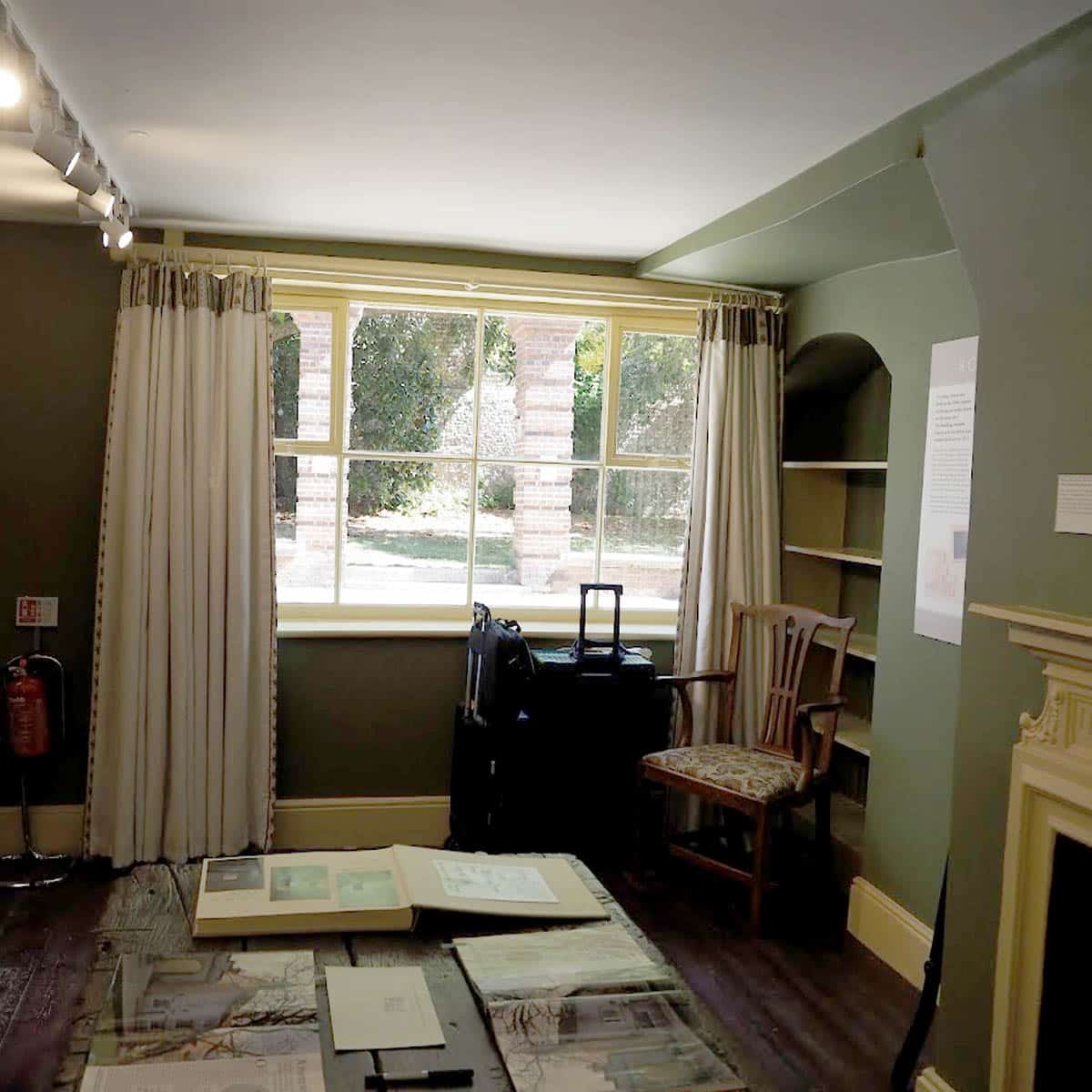
Number 8 is a modest townhouse, not grand but full of character. Its best feature is the pretty bow window on the first floor, which looks out onto what’s left of the garden of Dr George Gabell, who was Headmaster of Winchester College at the time. Jane herself wrote about that window in a letter: “We have a neat little drawing-room with a bow-window overlooking Dr. Gabell’s garden.” That one sentence connects us directly to her time there, and gives us a glimpse into the space she occupied.
When Jane and Cassandra lodged in the house it belonged to a local widow, Mrs Mary David, who owned several properties in College Street and made her living by letting out rooms. When they arrived, Mrs David offered Jane and Cassandra simple but comfortable accommodation — just what was needed for a short stay to get the medical help Jane so badly required.
That “neat little drawing-room” with its bow window became Jane’s main space. From the sofa set near the window, she could look out at Dr Gabell’s garden flush with summer green. The furnishings would have been plain and practical: a small table, a few chairs, and not much more. It was a quiet, simple room, but one that gave her some comfort and peace. Dr Gabell, tending his garden across the way, might have been a daily sight from the window. This was no busy thoroughfare, but a quiet corner of a learned town — a fitting setting for her final days.
Jane’s health had been failing for more than a year, and by May 1817 she was so unwell that her family decided she should move to Winchester to be closer to the expert care of Giles King Lyford, a respected surgeon at the County Hospital. The hope was that being close to him — and having access to better treatment — would help her. The journey to Winchester must have been exhausting for Jane.
Mr Lyford did what he could, but medicine in 1817 had little to offer for this illness. Jane was given laudanum for pain and cared for tenderly by Cassandra. The exact cause of her death is still debated. At the time, some thought she had “nervous consumption.” Modern doctors have suggested Addison’s disease, Hodgkin’s lymphoma, or lupus. We will never know for certain, but what is clear is that no treatment available then could have cured her.
Cassandra Austen was her sister’s devoted nurse, sitting at her side day and night.
Even while so ill, Jane’s humour never quite left her. Just three days before she died, she wrote a short, playful poem: “When Winchester races first took their beginning …”. This amusing poem is her last known piece of writing — brief, witty, and all the more moving when you think of the circumstances in which it was written. In the poem she depicts St Swithin, local saint of the city of Winchester, who tells the townspeople that he disapproves of their holding races on St Swithin’s Day, and states firmly “Behold me immortal”. As she wrote those lines, did Jane Austen have any idea how ‘immortal’ she herself would become?
Jane Austen died in the early hours of 18 July 1817, with Cassandra beside her. She was only 41 years old. A few days later, on 24 July, Cassandra watched the funeral procession from the window of the house.




College Street today still has a scholarly air. The Cathedral lies at one end, Winchester College is nearby, and gardens are tucked behind high walls. The survival of number 8 is something to be grateful for. The house, which now has a Grade II listing, remains modest, and from the outside it looks much as it did when Jane knew it. Visitors can pause at the plaque or stand in what remains of Dr Gabell’s garden and picture Cassandra caring for her sister there.
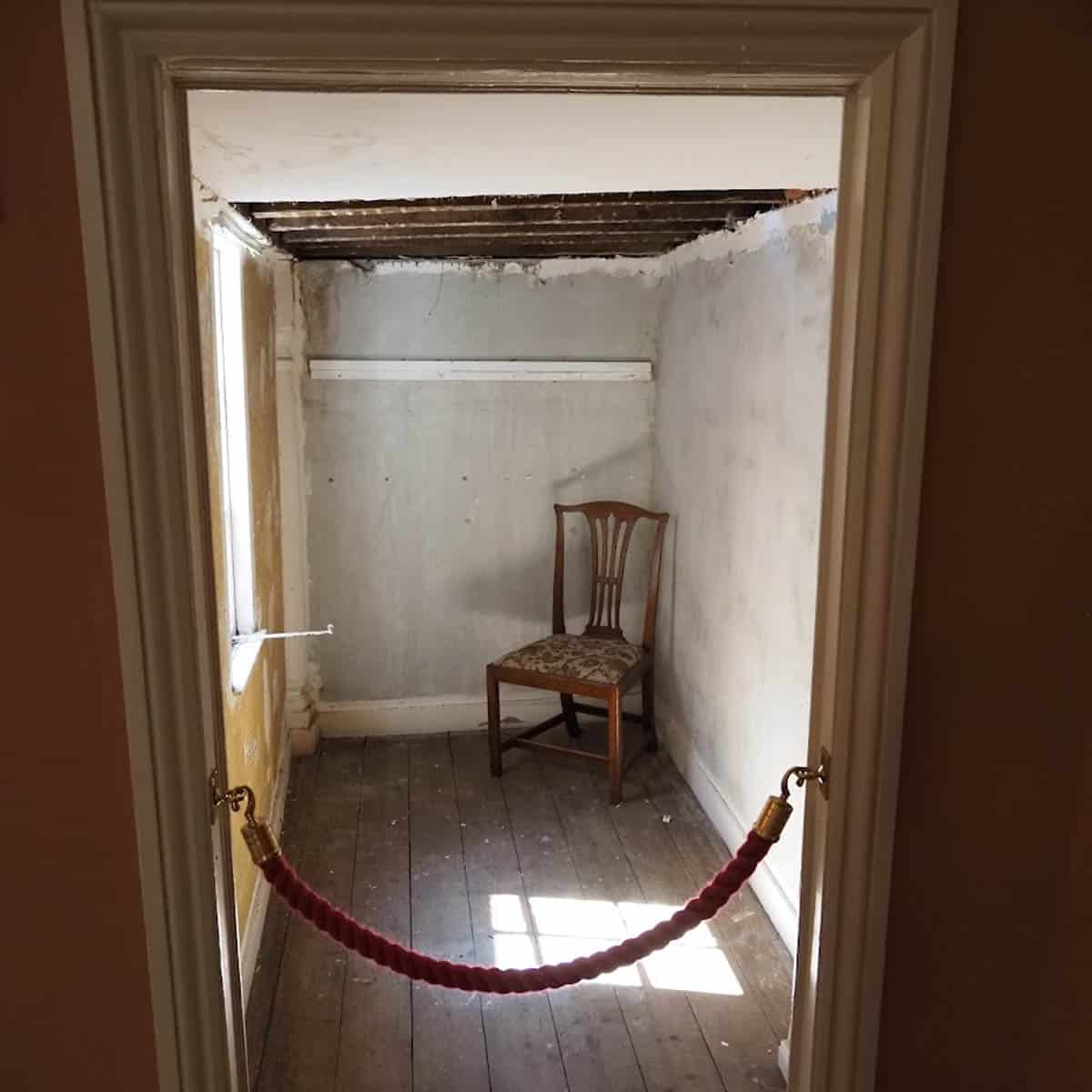
Inside, much care has been taken to restore or reveal original details: paint colours in the main rooms have been matched to historical layers uncovered during restoration. Carpet adhesives have been scraped back from timber floorboards; old plaster layers peeled to expose earlier colours; and woodwork and beams revealed in places to show how walls were built.
The first-floor bow-window room is a highlight. A Regency-style sofa has been placed in the room, and from that spot you can look out at roughly the same view Jane would have had.
There are three living spaces upstairs, a small room, possibly a washroom, and a landing lobby. There is also a corridor added later. The house is sparsely furnished so visitors can imagine how it might have looked. On the walls are quotations from Jane Austen and Cassandra’s letters. Downstairs are interpretative panels, glass cabinets with first editions of her novels, displays about the house’s history (owners, changes to structure) and how the restoration was done.
These lodgings were modest, suitable for a writer whose books were loved but whose financial position remained meagre. We don’t know exactly which room Jane died in, but the bow-window room is a likely guess.
Winchester College is not quite sure about the future of this house and its access to the general public. If they were to turn the rooms into a permanent museum, there is a lot of administrative work to be done, insurances to be paid and facilities to be provided. There has certainly been a great deal of interest in the rooms and thousands have visited the house this year, but we can only wait and see what decisions the College comes to regarding its future.
Visiting 8 College Street with my group, I was struck once again by the stillness of the house and the intimacy of the rooms. It remains modest but eloquent, a final chapter in the story of a life cut short but so richly accomplished.
Read more about 8 College Street.