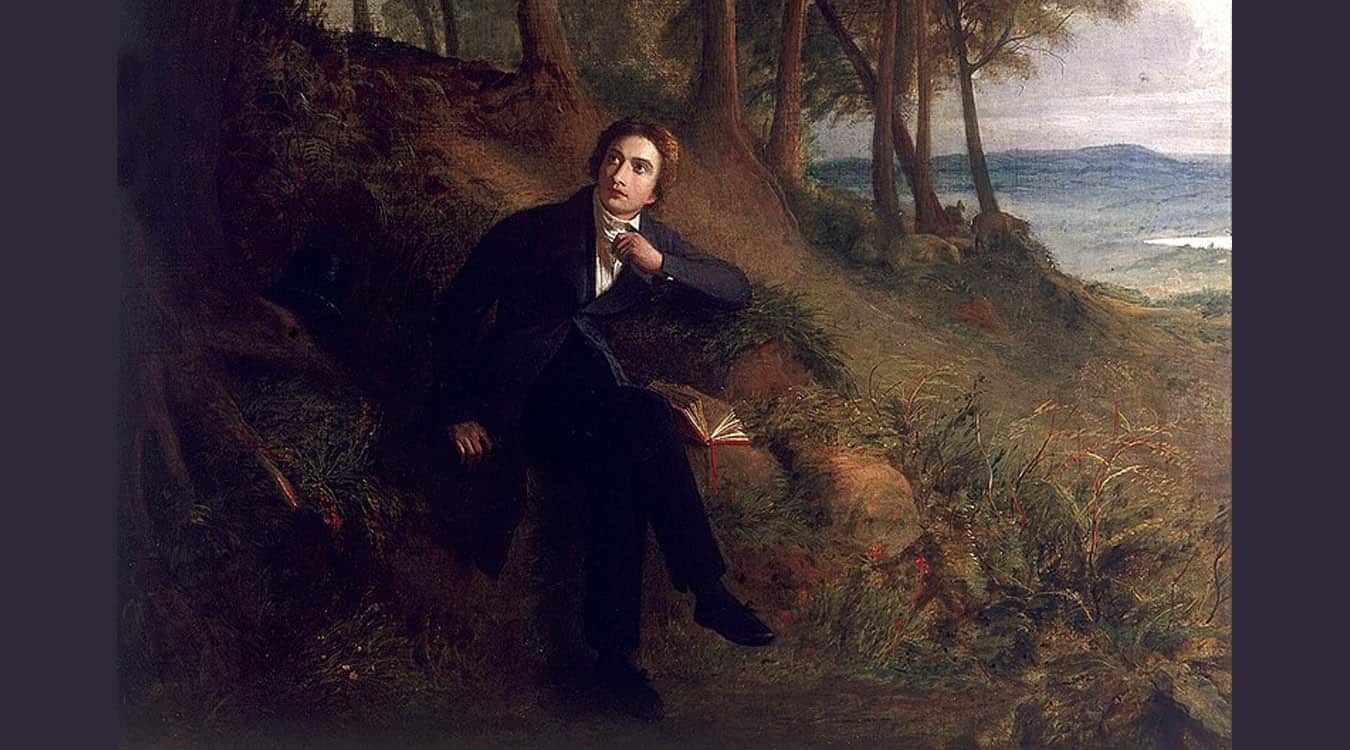
There are over 240 surviving letters from John Keats to his friends and family. Written between 1816 to 1820, the letters, besides being of biographical value, give precious insights into Keat’ poetical philosophy, his consciousness as a writer and of his language, and his attitudes towards the great works of his contemporaries and predecessors. [1]
John Keats was an English poet of the second generation of Romantic poets, which included Lord Byron and Percy Bysshe Shelley.
Born on 31 October 1795, in Moorgate, London, John was the eldest of four children in a family that faced much hardship. His father, Thomas, a stable keeper, tragically died in a fall when John was just 8 years old. His mother, Frances, remarried but later died from tuberculosis when John was 14. These early personal losses left a deep mark on John’s emotional world.
John Keats was initially trained as an apothecary and served as an apprentice to a surgeon. But medicine never truly captivated him, and he found himself drawn to poetry. In 1814, inspired by the works of poets such as Spenser and Milton, he began writing seriously, immersing himself in the classics to develop his distinctive voice. His early verse contained rich imagery and an appreciation for nature, both of which would define his later works.
By 1817, Keats’ poetry began to gain recognition, although reviews were often mixed. His first published volume, Poems, was met with indifference, but the critic John Wilson attributed the book’s failure to Keats’ youth and lack of polish. This didn’t deter him, and in the following year, he released Endymion, his first major poetic work. Although also criticised for its exuberant style, it contained the seeds of his most celebrated works.
In 1818, Keats moved into the Hampstead home of his close friend Charles Brown, where he wrote some of his finest works, including La Belle Dame sans Merci and Ode to a Nightingale. These poems, characterised by their lush, sensuous language and exploration of fleeting beauty, established Keats as one of the leading figures of the Romantic movement.
Despite a brief life, cut short by tuberculosis at the age of 25, John Keats’ poetry continues to appeal to readers, confirming his reputation as one of the greatest English poets.
Selected links for relevant websites, books, movies, videos, and more. Some of these links may lead to protected content on this website, learn more about that here.