Joan Aiken wrote sequels and continuations of Jane Austen’s novels, taking characters and situations from Austen’s works and developing them further. She is known for her “Jane Austen continuations,” which include Mansfield Revisited, Jane Fairfax, Eliza’s Daughter, Emma Watson, The Youngest Miss Ward, and Lady Catherine’s Necklace. [1]
Joan Aiken MBE was one of the most imaginative voices in twentieth-century English literature, best known for her beguiling blend of historical fantasy, supernatural suspense, and children’s fiction. Born on 4 September 1924 in the cobbled charm of Mermaid Street in Rye, Sussex, she grew up amid literary pedigree: her father was the Pulitzer Prize-winning poet Conrad Aiken, and her siblings Jane and John were writers too. With such a background, storytelling seemed almost a birthright.
Educated at home by her Canadian mother until age twelve, and then at Wychwood School in Oxford, Aiken did not attend university. But she was already publishing stories by her teens, with her first adult short story appearing in print when she was just seventeen. A 1941 children’s tale broadcast on the BBC marked the beginning of a career that would span over a hundred books.
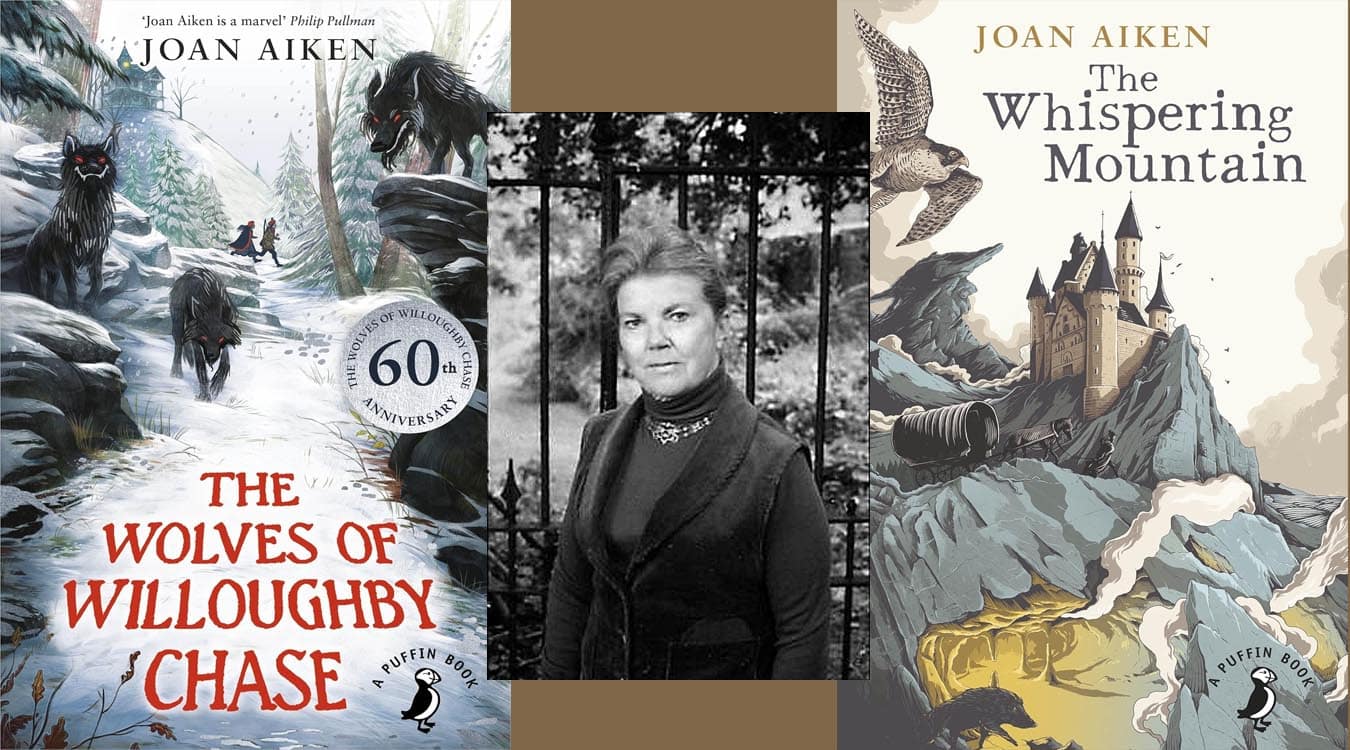
After the death of her husband Ronald Brown in 1955, Aiken turned to writing in earnest while working at Argosy magazine, honing her craft in editorial roles and publishing short stories. Her breakthrough came with The Wolves of Willoughby Chase (1962), a gripping alternate-history tale that launched a beloved series known for its fearless heroines, gothic landscapes, and villainous adults. Aiken’s flair for dramatic atmosphere and linguistic inventiveness gave her novels enduring appeal.
She received numerous accolades, including the Guardian Children’s Fiction Prize for The Whispering Mountain (1968), and the Edgar Allan Poe Award for Night Fall (1972). In 1999, she was awarded an MBE for services to children’s literature—a fitting recognition for an author who entranced generations of readers.
But Aiken was not confined to one genre. Alongside her children’s novels, she wrote chilling supernatural tales, Jane Austen-inspired sequels, and essays celebrating classic literature. A passionate admirer of Austen, Aiken brought wit and respect to her pastiches, enriching the genre of literary continuation.
Joan Aiken died in 2004, leaving behind a literary legacy as rich and strange as the worlds she created.
Selected links for relevant websites, books, movies, videos, and more. Some of these links lead to protected content on this website, learn more about that here.