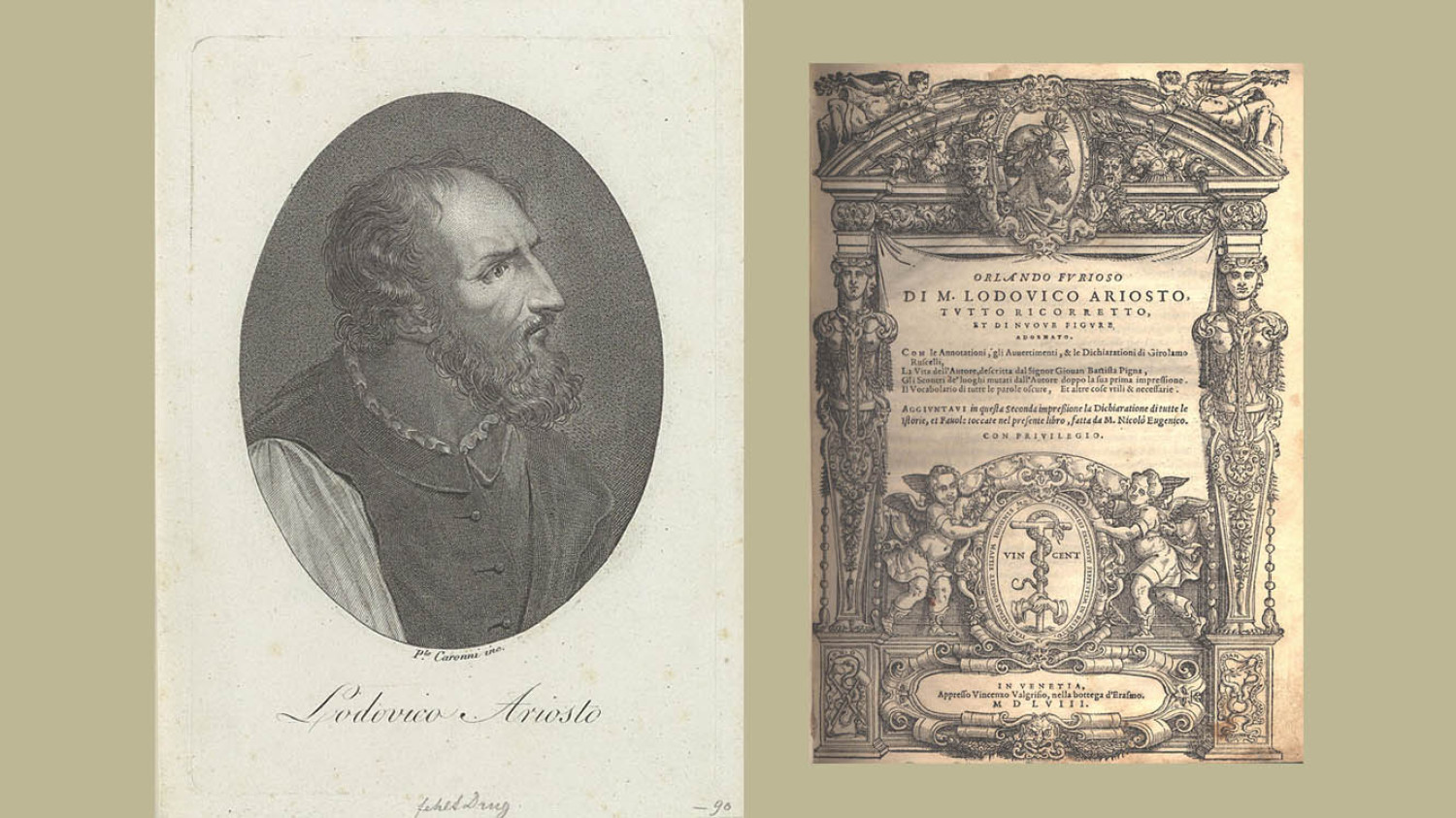
Ludovico Ariosto’s poem, Orlando Furioso was a best-seller in the 1500s, and its popularity lasted well into the next century. The poem inspired many later works of art and music. A number of European painters, including Peter Paul Rubens, painted scenes from the poem and inspired musical composers such as Claudio Monteverdi. A century later, Antonio Vivaldi and George Frideric Handel each used the poem as the basis of an opera. [1]
Ludovico Ariosto, an influential Italian poet, was born on 8 September 1474 in Reggio Emilia. His epic poem Orlando Furioso is considered one of the greatest works of the Italian Renaissance.
Born into a prominent and noble family, Ariosto was the eldest of ten children. He was expected to inherit his father Niccolò’s position as commander of the citadel. However, his personal interests diverged sharply from the family’s expectations.
Although deeply passionate about poetry, Ariosto was obliged by his father to study law. He attended the University of Ferrara, where his interests expanded to include the classics, particularly the works of Virgil, Horace, and Ovid. This exposure to classical literature greatly influenced his writing, providing the foundation for his exploration of love, honour, and human nature. After five years of legal studies, he was finally allowed to study the classics more freely under the guidance of Gregorio da Spoleto.
The death of his father in 1500 forced Ariosto to shift his focus from literature to family responsibilities, managing the affairs of a household in disarray. Despite these obligations, he wrote several comedies and lyrical pieces, which caught the attention of Cardinal Ippolito d’Este. Este took Ariosto into his household, but his patronage was neither generous nor appreciative. Ariosto later lamented that Este, who despised poetry, only provided him a modest pension for menial tasks, not for his literary contributions.
During the Renaissance, with its renewed interest in classical texts, Ariosto immersed himself in myth and history, drawing inspiration from epic forms. He experimented with both dramatic and narrative styles, creating five comedies and seven satires. His literary influence grew steadily, setting the stage for his crowning achievement, Orlando Furioso.
Selected links for relevant websites, books, movies, videos, and more. Some of these links lead to protected content on this website, learn more about that here.