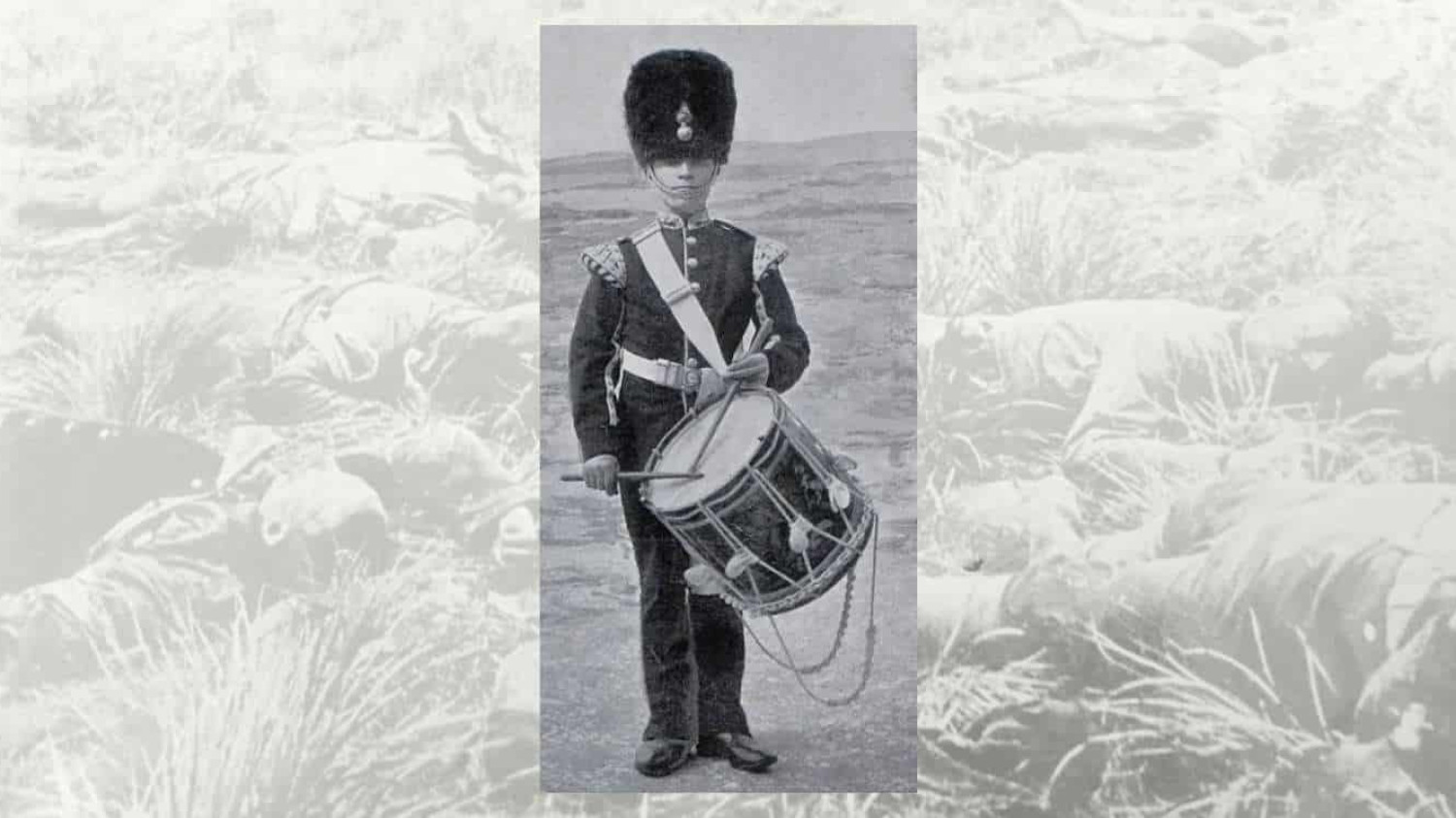
Thomas Hardy is one of my favourite poets. I adore the emotion and simplicity of his war poem about a young English soldier buried in South Africa as a result of the Boer War.
Drummer Hodge by Thomas Hardy
I
They throw in Drummer Hodge, to rest
Uncoffined—just as found:
His landmark is a kopje-crest
That breaks the veldt around;
And foreign constellations west
Each night above his mound.
II
Young Hodge the Drummer never knew—
Fresh from his Wessex home—
The meaning of the broad Karoo,
The Bush, the dusty loam,
And why uprose to nightly view
Strange stars amid the gloam.
III
Yet portion of that unknown plain
Will Hodge for ever be;
His homely Northern breast and brain
Grow up a Southern tree,
And strange-eyed constellations reign
His stars eternally.
The poem is about the lonely death of a young man from Wessex, dumped into a grave in the Karoo, far from home and in a land extremely foreign to him and under a sky whose stars are unfamiliar. Hardy uses local words – ‘veldt’ for open country, ‘kopje’ for small hill. Stars are the traditional symbol of fate, and it was the military drummer’s fate to die in a war he didn’t understand. Hardy makes it all feel so anonymous – the ‘they’ who bury him are not identified, there is no information as to how he died, we do not know the young man’s first name, or where in Wessex his beloved home was. The poem mirrors the brusque, impersonal way Hodge is treated by those in authority. War strips everyone of all but the crudest markers. Hodge’s death is strange and brutal. He was there to play music, not to kill. He was ignorant of the causes of the war he was engaged in, and had no connection with the country where his body would rest. Death has rooted him in a place where he had no roots. The emphasis on the foreign environment stresses how out of place he was in a conflict between Boer settlers and the British who wanted the natural resources of the land. The poet questions imperial meddling in South Africa. Hodge’s “northern” body ends up fertilising a “southern” tree – he becomes a “portion” of the land that meant nothing to him. His empire has uprooted him and sent him far from a community that would have honoured him to be an interloper in someone else’s land.
The poem was first published as ‘The Dead Drummer’ in 1899, the year the Second Boer War broke out. It’s a moving and superbly written poem. Sadly, in our war-torn world, its message is all too relevant today.
There’s a nice audio reading of it by Arthur L. Wood:
Did you enjoy this poem? Let me know by leaving a comment.
Selected links for relevant websites, books, movies, videos, and more. Some of these links lead to protected content on this website, learn more about that here.
Susannah Fullerton: Thomas Hardy is born
Susannah Fullerton: Thomas Hardy marries for the second time
Susannah Fullerton: Edward, Prince of Wales, lunches with Thomas Hardy
Susannah Fullerton: Thomas Hardy dies
Susannah Fullerton: Beyond the Last Lamp by Thomas Hardy
Susannah Fullerton: When I set out for Lyonnesse by Thomas Hardy
Susannah Fullerton: In Church by Thomas Hardy
Susannah Fullerton: The Ruined Maid by Thomas Hardy
Susannah Fullerton: The Convergence of the Twain by Thomas Hardy
Susannah Fullerton: Wessex, a wire fox terrier
Susannah Fullerton: Thomas Hardy’s Ale
Susannah Fullerton: The Hardy Tree
Susannah Fullerton: 5 Unpopular 19th Century Novels that Became Classics
Susannah Fullerton: Thomas Hardy: Novelist and Poet
Susannah Fullerton: Video Talk – Tess of the D’Urbervilles by Thomas Hardy
Hardy Society
Hardy’s World
Poetry Foundation: Thomas Hardy
The Guardian: Thomas Hardy
The Victorian Web: Thomas Hardy
Heather
I love this poem and first heard it in the movie The History Boys – Richard Grffiths read the poem in the movie and he thought it was better than Rupert Boook’s famous poem – “If I should die….
I have the DVD and must watch it again.
Susannah Fullerton
It’s so moving, isn’t it. And thanks for reminding me that it was in The History Boys.
Merry Taylor
How timely that I should check my email and find this poem of Drummer Hodge which I had read before in a biography of Thomas Hardy. It touched me so much then and once again today as I had just finished “The Guns Of August” yesterday. The story of the first month of WWI is a Pulitzer-winning masterpiece that brings to heart the tragic waste of young life through the war aims of old generals. Thank you for including it in your message. We need it now!
Susannah Fullerton
I am so glad you liked this month’s poem. It is so moving, isn’t it? Yes, it would definitely have resonated with ‘The Guns of August’ – Barbara Tuchman is such a wonderful writer, isn’t she!
And, sadly, still so many lessons from this poem that the world is failing to learn.
Heather Graant
I love this poem and in fact, love Tomas Hardy’s poems. This poem was also quoted in the movie The History Boys which was originally a play.
Susannah Fullerton
I knew it had been in a film but couldn’t remember which one. Many thanks for reminding me. Isn’t it a beautiful poem!
Graham H.
Yes – enjoyed the poem or at least, thought it was a good poem, as so many of Hardy’s are. But I had an alternative response. I think it’s disingenuous to say that “He was there to play music, not to kill”. On my reading he was “cravenly inciting violence with his murderous drumbeat”, and he was using the soldiers doing the actual fighting as “catspaws”. And I don’t think his ignorance of the issues is anything to be proud of, if he is encouraging others to fight. He has a greater burden of responsibility to be certain of his ground, in my view, if he is influencing others. “Serves him right!” (on my reading) “if he gets thrown in uncoffined! And is graved, elsewhere than under the homely constellation of the Plough”. I wonder whether Hardy intended a particular interpretation or whether he was leaving it to each reader, to formulate their own.
Helen
Your response is well penned Graham H, though I do still feel the emotion and tragedy of the Drummer’s death.
That said – to be buried in the Karoo, and remembered as being under the earth, under the stars, is perhaps more gentle a reflection than dying and lying forever in a muddy trench.
Susannah Fullerton
Ouch! Poor Drummer Hodge. As an ignorant young country boy from Wessex in the Victorian era, how much choice did he have. And wasn’t a drummer a very humble position in the regiment – he was told to drum and he had to obey, rather than setting out to drive others to their deaths. I am not kene on armies, and hate what they do, but feel sympathy for the young man in the poem, who is probably in his teens and has had very little experience of life. We might have to agree to disagree on this one, Graham.