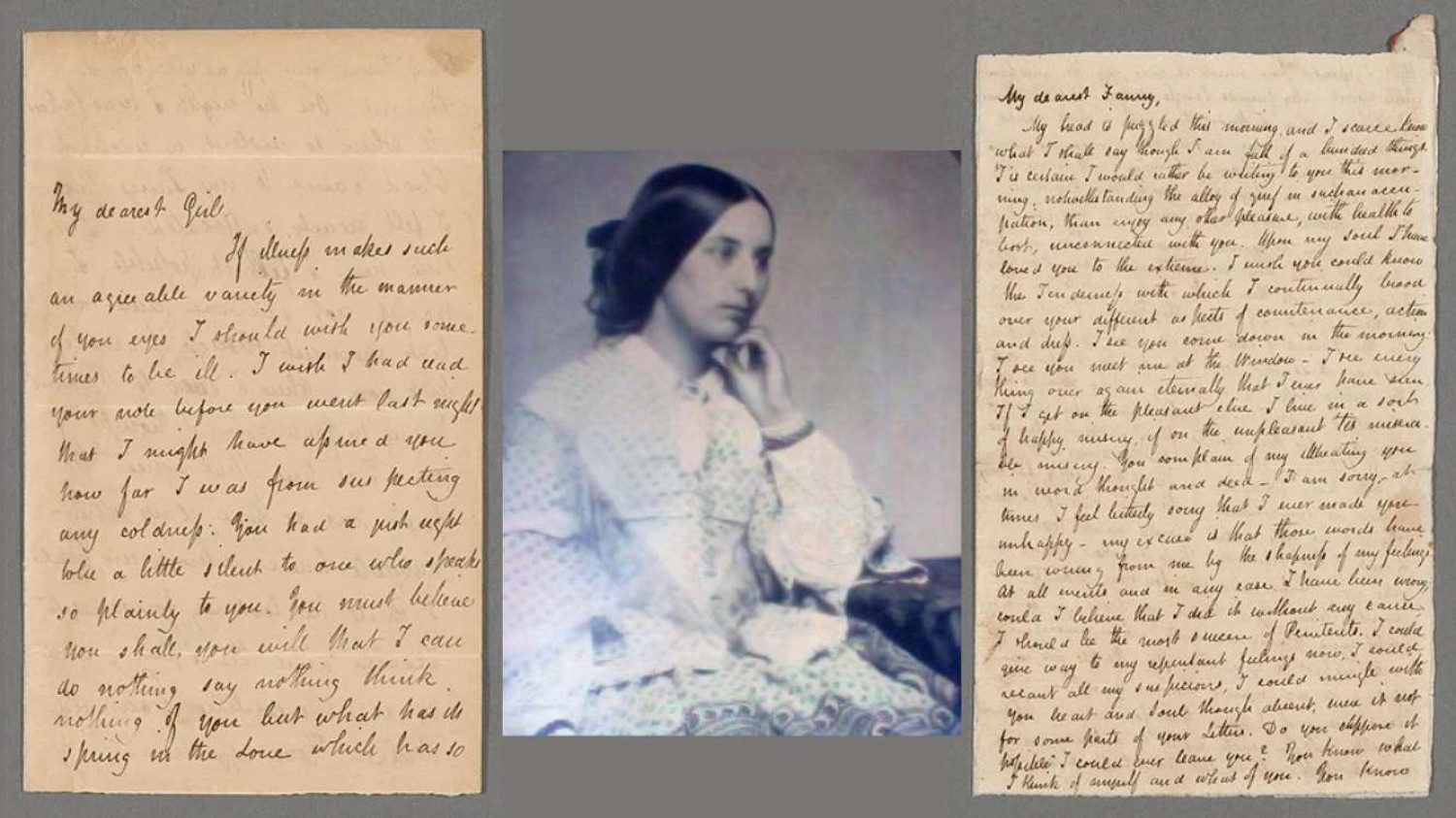
Letters written by the Romantic poet John Keats to Fanny Brawne will be coming up for auction this month at Sotheby’s in New York. They are expected to fetch between US$1.5 – $2 million. There are 8 letters, which have been bound in a leather volume and they date from 1819 to 1820 when Keats, who was dying from tuberculosis, had to conduct his courtship through the written word. The pair had met as neighbours in Hampstead (in what is now the Keats Museum in Keats Grove), and although they got secretly engaged in 1819, Keats must have known he would never actually marry her because of his illness. He died in Rome, aged only 25. Seven of the eight letters lack postmarks, because they were delivered by hand, not through the post.
After her ardent lover died, Fanny Brawne hid the letters, but they eventually passed to her children. In 1878 they agreed to publish the letters, and then in 1885 they sold the letters at Sotheby’s. By the early 20th century, the letters had come into the possession of John Hay Whitney (his family had made a fortune from publishing and finance). However, in the 1980s there was a theft at his estate, and the letters and several rare books were stolen. Nothing more was heard of the missing items until, in 2025, a man turned up at a rare book shop, asking for help in selling letters and some rare volumes. The man claimed to have inherited the items from his grandfather, but the rare book dealer contacted the authorities and the items were handed back to Whitney’s descendants.
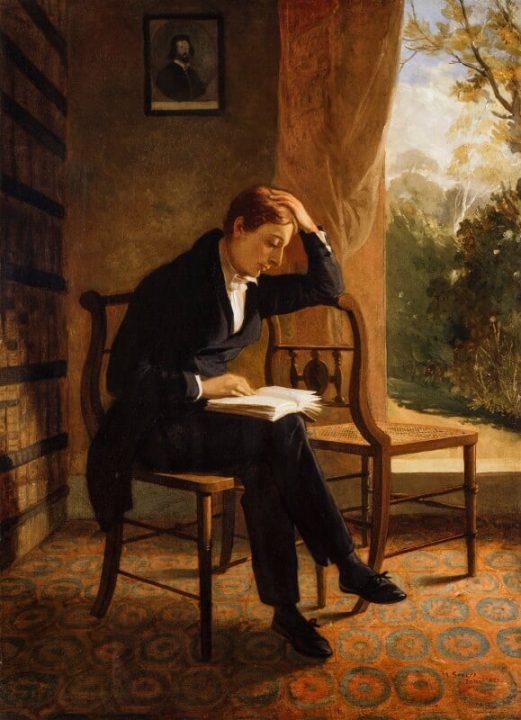
Keats was not only a brilliant poet, but a superb letter writer as well. These love letters are documents of huge importance and will hopefully find the right home in a library where they can be viewed.
However, it is sad to reflect that we will not have many such documents in the future. Poets tend to contact their boyfriends or girlfriends by email or text message these days, so won’t be leaving to posterity yellowing pages covered with elegant handwriting, with crossings out, changes, signatures, stains from tea cups or wine glasses, and other aspects that make old letters so fascinating to view. Keats wrote so lyrically of his feelings in such lines as this: “Ask yourself my love whether you are not very cruel to have so entrammeled me, so destroyed my freedom. Will you confess this in the Letter you must write immediately, and do all you can to console me in it—make it rich as a draught of poppies to intoxicate me—write the softest words and kiss them that I may at least touch my lips where yours have been.”
I suspect the letters will remain in the USA, and hopefully, some benefactor will step forward to ensure that they remain accessible to the public. I’d love to go and view them one day! Would you? Tell me your thoughts by leaving a comment.
Selected links for relevant websites, books, movies, videos, and more. Some of these links may lead to protected content on this website, learn more about that here.
The Keats Foundation
Poetry Foundation: John Keats
English History: Fanny Bawne
Susannah Fullerton: John Keats is born
Susannah Fullerton: John Keats’ first poem is published
Susannah Fullerton: John Keats & Bright Star
Susannah Fullerton: Keats Shelley House, Rome
Poems by John Keats
The Complete Poems of John Keats by John Keats
Leon Robinson
Hello Susannah,
Thanks for your regular letters I look forward to them each month!
I’ve just returned from a wonderful trip to England and Norway . The Norway trip was magic and I’d like to recommend it to you and your readers .
It was P&O 14 day cruise on the Aurora from Southampton !
We visited Lofoton islands above the arctic circle and received a certificate to keep !
We also visited many lovely villages and fjords and mountains , the scenery is superb .
One of our stops was Tronheim with its beautiful gothic 11 cent cathedral which has St Olaf first king of Norway buried there . He was killed in 1031. In a battle with English King Canute . On the way from Southampton I visited the lovely and my favourite Winchester Cathedral where ironically Canute is buried !
Also of course Jane Austen !
Thanks again for all your wonderful and engaging letters .
Bye now Leon Robinson
Susannah Fullerton
I have been lucky enough to visit Norway which I thought one of the most spectacular countries I have ever seen. However, I am envious that you got tot he Lofoten Islands as I’d love to go there, and I didn’t get as far north as Trondheim either.
There’s so much fabulous Norwegian literature – Ibsen, Sigrid Undset, all the crime writers, not to mention fairy tales like the Three Billy Goats Gruff.
I am so glad you enjoy my newsletter.
Janet
Even if letters are only in email, they can be placed in a folder and easily reproduced. Maybe you won’t see handwriting. But the words will be there.