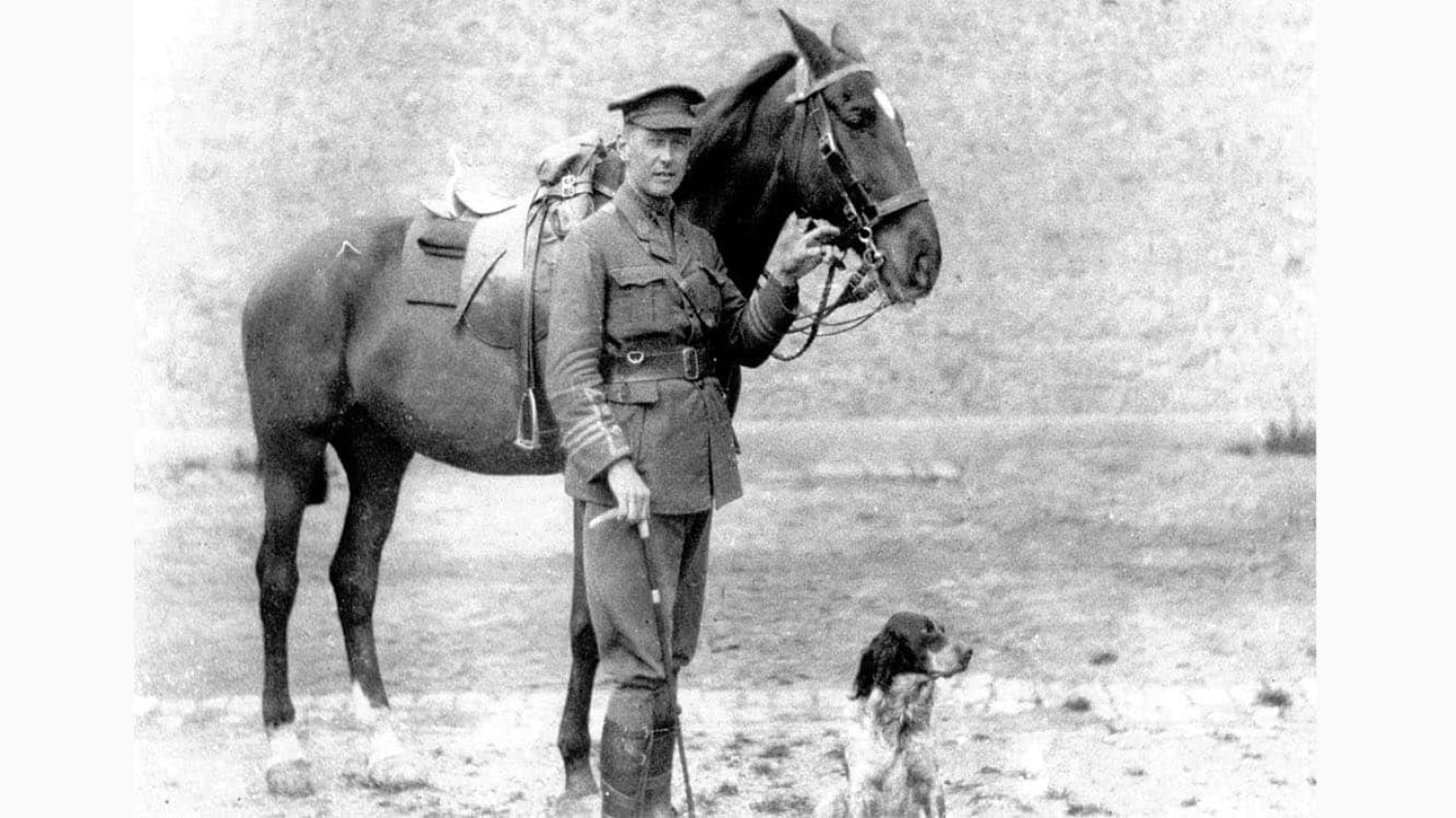
Poet John McCrae did not have to volunteer to serve in World War I. At nearly 42, he was older than most of the men enlisting. However, as a Canadian with recent Scottish heritage, he had a strong work ethic and deep sense of patriotism, so he decided to join up and work as a field surgeon. It was in 1915 that he wrote the poem for which he is remembered today – In Flanders Fields.
After reaching the battlefields of Europe, McCrae had an unsatisfactory horse. However, a medical colleague back in Canada shipped a horse over to McCrae, an animal that was fast and sure-footed, and this chestnut horse became McCrae’s much-loved companion and was named Bonfire. When the stresses of war became too much, McCrae would often ride Bonfire at night, away from the mud and horror of the trenches. To him, the horse was a symbol of beauty and decency in a world that had gone mad. His letters home to nieces and nephews were signed with a horseshoe, reporting regularly on Bonfire’s well-being and activities, with the horse credited as author of the epistles. Bonfire was very fond of blackberries and would stop to nibble them in the hedgerows whenever he got the chance. Man and horse had a very close bond: “All the hard spots to which one’s memory turns the old fellow has shared though he says so little about it.”
John McCrae died from pneumonia and meningitis in 1918.
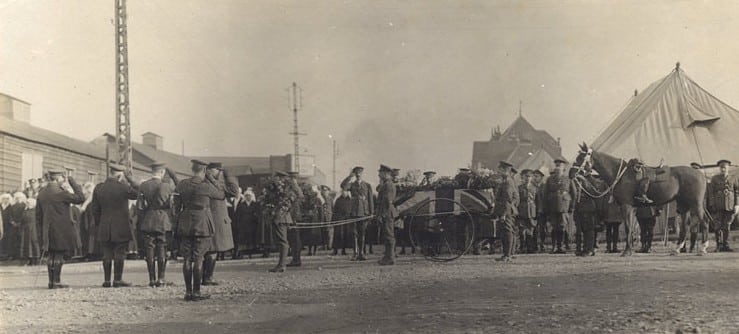
It was Bonfire who led the funeral procession to Wimereux Cemetery, with his master’s boots reversed in the stirrups. Bonfire spent his last years in retirement, funded by the poet’s friends.
What do you think of this literary pet? Tell me your thoughts in a comment.
Selected links for relevant websites, books, movies, videos, and more. Some of these links lead to protected content on this website, learn more about that here.
Cynthia Parsons
Thanks for the details of Bonfire and his relationship with John McCrae. It was so sad but uplifting at the same time. As a horsey family I can see how this bond could be formed in a time of carnage and trauma. So pleased Bonfire was able to live his life out as, by comparison, so few of the Walers who went overseas and were so brave and loved were able to be returned to Australia after their service. The photo was just wonderful to see and a tribute to them both.
Susannah Fullerton
John McCrae was a very fine man and I am so glad you liked the story of Bonfire. I am having fun this year doing my series on Literary Pets. It will be a dog next month. Yes, animals have played important roles in wars and often had sad fates as a result.