In 1988, when an asteroid or minor planet was named Lindgren 3240 in her honour, Astrid Lindgren quipped that her new moniker should be Asteroid Lindgren. [1]
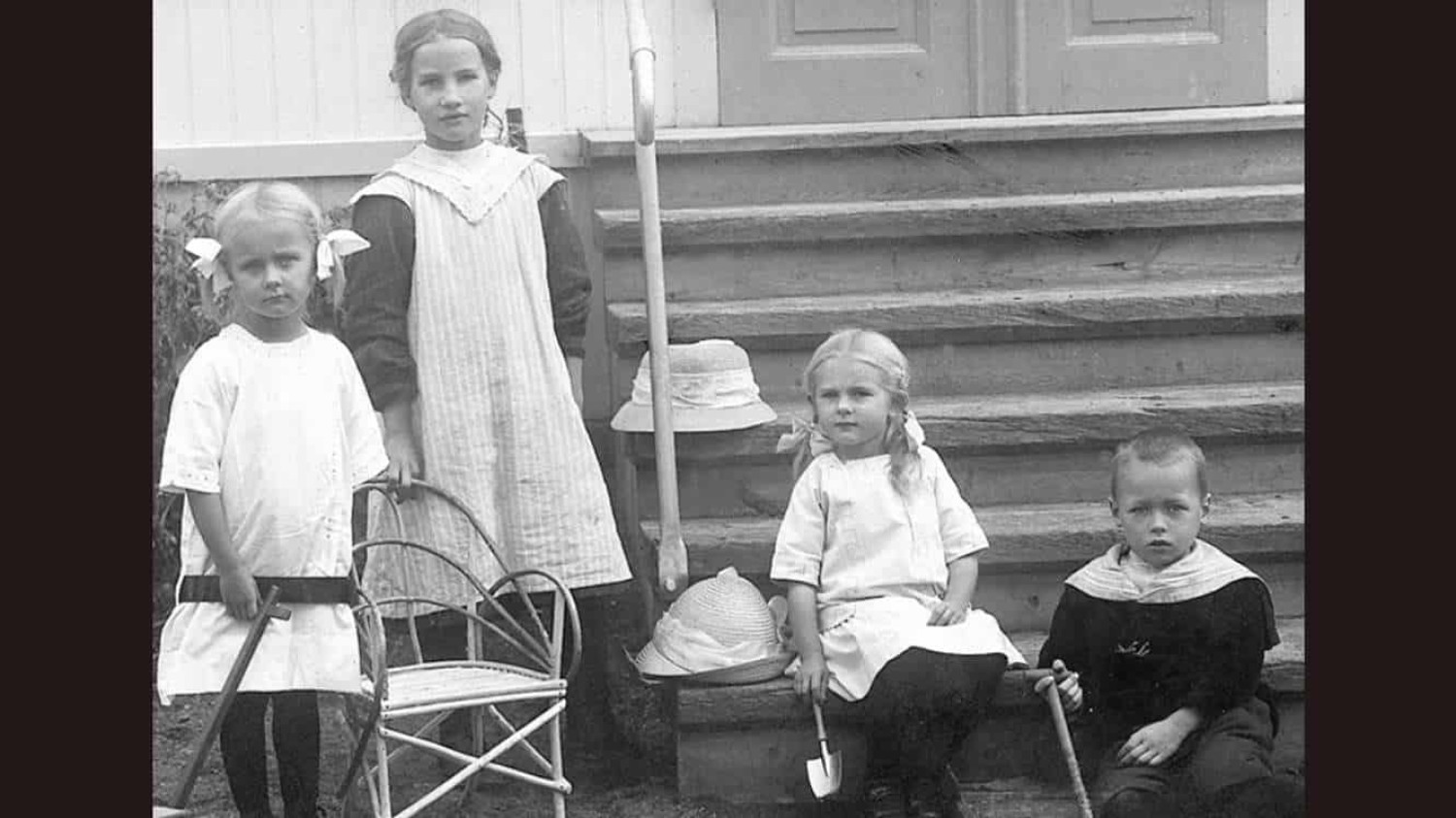
Astrid Anna Emilia Ericsson was born on 14 November 1907 in a rural township in south-eastern Sweden. She was the second of four children in a close-knit household headed by Samuel August Ericsson, a tenant farmer, and his wife Hanna. The family lived at Näs, a farm on the outskirts of Vimmerby, and it was this landscape—its fields, forests, and traditional patterns of work—that shaped the foundations of her imagination. Astrid Lindgren is best remembered today for her Pippi Longstocking stories.
The Ericsson children grew up in an environment marked by security, order, and a strong work ethic. Daily life on the farm required the participation of every family member, yet it also gave the children the freedom that was typical of Swedish rural life at the turn of the century. Lindgren’s descriptions of her upbringing emphasise its stability: regular chores, community gatherings, and the seasonal rhythms that defined agricultural existence.
Although books were not abundant in the household, storytelling played a central role in family and community life. Local folklore, biblical stories, and recollections from older generations provided Astrid with early exposure to traditional stories. These influenced the clarity and directness that hallmarked her later prose.
Astrid attended the local school in Vimmerby, where she was a good student. She showed an early aptitude for writing, and at the age of thirteen had a short piece published in a regional newspaper, an early indication of her literary promise. Her education continued at the Vimmerby Higher Elementary School, where she developed broad academic interests.
Finishing school, Astrid moved to the capital city of Stockholm and learnt the skills of a secretary. While there in 1926, she gave birth to her only son, Lars, who was fostered for four years and then returned to her. Starting in 1928, she worked as a secretary at Sweden’s Royal Automobile Club. In 1931, she married her boss, Sture Lindgren (1898–1952), and gave birth to her second child, Karin, in 1934.
In 2017, Astrid Lindgren was said to be the world’s 18th most translated author, and by 2010 had sold roughly 167 million books worldwide. She died on 28 January 2002 at the age of 94.
Selected links for relevant websites, books, movies, videos, and more. Some of these links lead to protected content on this website, learn more about that here.
Susannah Fullerton: The Life and Writings of Astrid Lindgren
Susannah Fullerton: Literary Statue – Astrid Lindgren
Susannah Fullerton: Literary Trees – The Lemonade Tree
Susannah Fullerton: Writers On The Money
Susannah Fullerton: Literary Travels
Susannah Fullerton: Literary Films
Susannah Fullerton Video Talk: Literary Scandinavia – Susannah’s Top Ten Places to Visit
Susannah Fullerton Video Talk: Pippi Longstocking – Astrid Lindgren
Astrid Lindgren
Pippi Longstocking by Astrid Lindgren