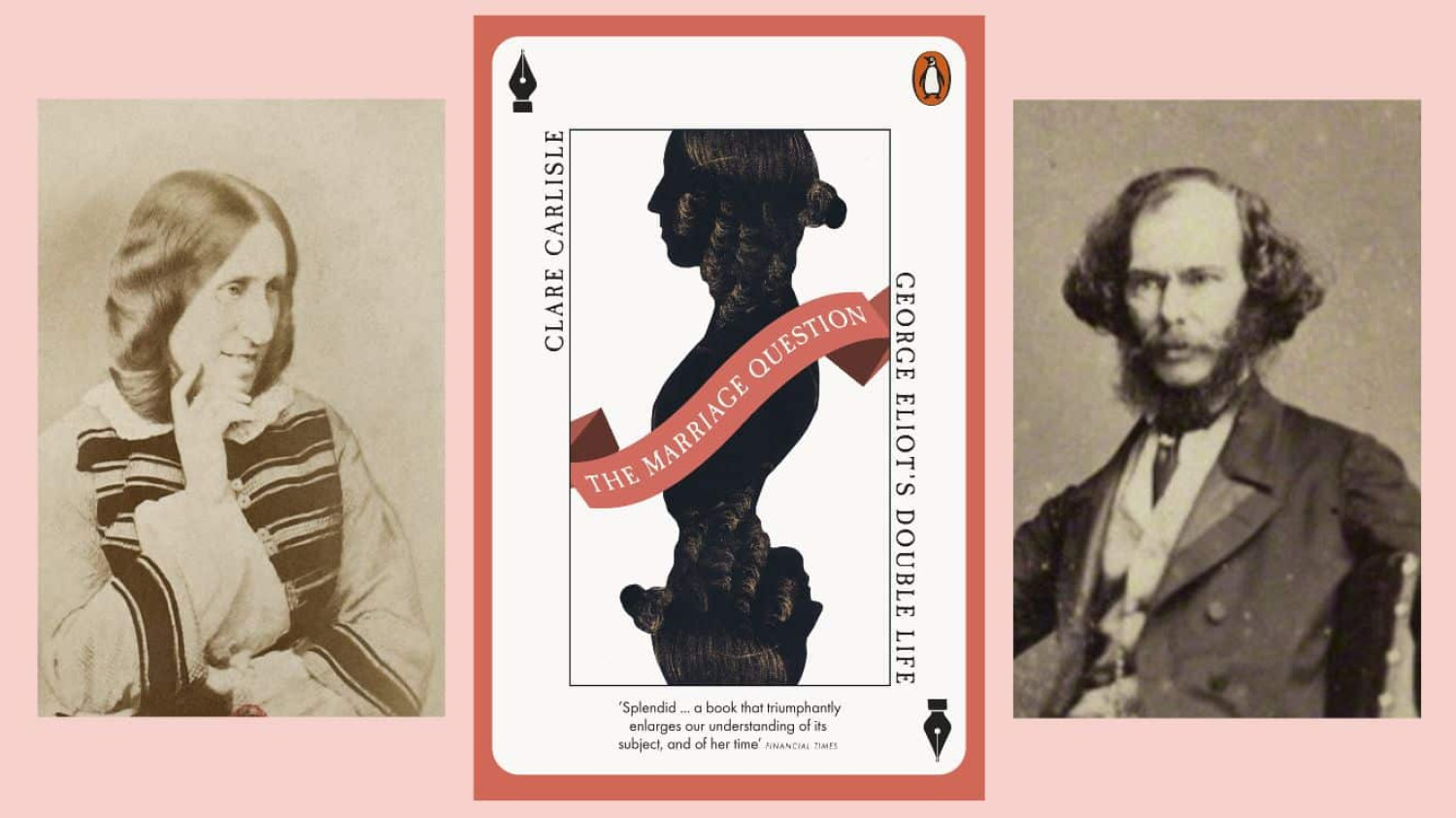
Every so often you read a book that leaves you almost breathless, in awe of its superb research and the clarity of its writing, breathless from the way you could hardly wait to turn each page, and grief-stricken when it was finished. This is how I felt about The Marriage Question: George Eliot’s Double Life by Clare Carlisle, published in 2023. I bought it in a bookshop some months ago but only got around to reading it recently.
Any biography of George Eliot should be interesting because her life story was so extraordinary, but this biography was unusual in that it told the tale of her life through the lens of ‘marriage’, her views on marriage, how marriage is handled in her fiction and her personal experiences. In July 1854, the woman who was born Mary Ann Evans, but who had several name changes throughout her life, left England for Europe in the company of a married man, George Henry Lewes. He was unable to divorce his wife (who’d been having an affair with his best friend, and borne his children) so he could not marry the incredibly intelligent woman with whom he had fallen in love. They ‘eloped’ together to Europe, but there was never any wedding ceremony and, in the eyes of Victorian society, this condemned her (though not him – he could still go out into society). She called herself Mrs Lewes, had her earnings paid into his bank account, was ‘Mother’ to his children and they remained devoted to each other until he died in 1878. In every respect, except legally, she was his wife.
By the time of Lewes’s death, George Eliot was famous, thanks to such novels as Adam Bede (one of Queen Victoria’s favourite novels), The Mill on the Floss and Middlemarch. She earned more by her pen than any other woman in England and her reputation had begun to improve, in spite of the scandal of her irregular relationship with Lewes. Only 18 months after Lewes’ death, George Eliot did undergo a wedding ceremony. She married American banker John Cross who was twenty years younger than she was – the age difference and the rapidity of this marriage again created scandal and gossip. He tried to commit suicide on their honeymoon, but together they enjoyed (or not?) only seven months of married life before her sudden death.
The Marriage Question tells of both relationships and analyses them in fascinating detail. It shows the challenges she faced as a plain woman and a brilliant one, in a society that valued female beauty but not brains. She was clearly a woman who longed for love, and she almost certainly would never have written her fiction had it not been for Lewes, yet he controlled her dealings with publishers and was always her first critic.
I kept thinking about this book for days after reading it and wanted to discuss it with literary friends. I adored reading it and cannot recommend it too highly. Give yourself a treat and read this book, and of course George Eliot’s novels as well. A few years ago, I listened to a superb audio reading of The Mill on the Floss, read by Eileen Atkins – it was bliss! I’d forgotten what a funny book it is (apart from its ending) and what a fabulous heroine Maggie Tulliver is. One never regrets a dive into the amazing world of George Eliot and this book will make you appreciate her even more.
What are your thoughts? Please leave a comment.
Selected links for relevant websites, books, movies, videos, and more. Some of these links lead to protected content on this website, learn more about that here.
The Marriage Question: George Eliot’s Double Life by Clare Carlisle
The Mill on the Floss by George Eliot
Middlemarch by George Eliot
Adam Bede by George Eliot
Susannah Fullerton: George Eliot links
Susannah Fullerton: Mary Ann Evans is born
Susannah Fullerton: George Eliot commences work on Middlemarch
Susannah Fullerton: George Eliot dies
Susannah Fullerton: George Eliot turns 200
Susannah Fullerton: George Eliot & Middlemarch, A video talk
Susannah Fullerton: George Eliot & Middlemarch, A Reader’s Guide
Exploring George Eliot: Discover George Eliot
George Eliot Archive
George Eliot Archive: George Henry Lewes