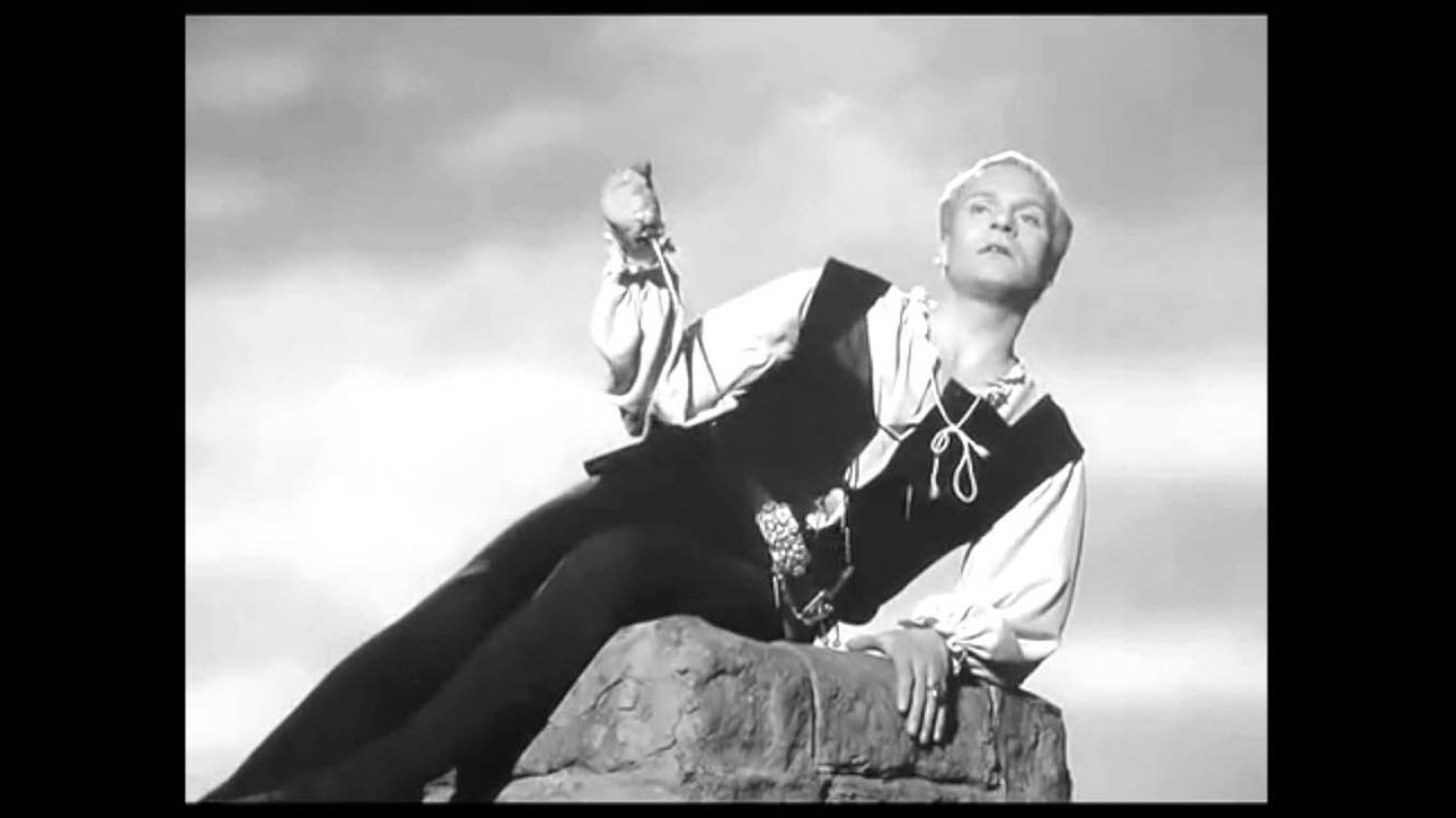
The phrase “To be or not to be” is the opening line of one of the most famous soliloquies in William Shakespeare’s play Hamlet. In what is, quite possibly the most famous speech in literature, Hamlet contemplates the nature of existence and the human condition. The soliloquy, from Act 3, Scene 1, begins as follows:
To be or not to be, that is the question:
Whether ’tis nobler in the mind to suffer
The slings and arrows of outrageous fortune,
Or to take arms against a sea of troubles
And, by opposing, end them.
You can read the rest of the soliloquy here.
Hamlet is grappling with profound philosophical and existential questions. He is contemplating whether it is better to endure the suffering and challenges that life presents (to be), or to end one’s own existence (not to be). Hamlet is torn between these two options, and he is reflecting on the idea of suicide as a way to escape the difficulties and pain of life.
This monologue explores themes of life, death, suffering, and the unknown, that run throughout the play. It is a reflection of Hamlet’s inner turmoil and his struggle to make sense of the world around him. The soliloquy is often quoted and studied for its deep philosophical and psychological insights into the human condition.
Did you know?
Some ‘To be or not to be’ trivia.
- The opening line of this soliloquy is the most searched-for Shakespeare quote on the internet – many times more than all other Hamlet quotes.
- Prince Hamlet has 358 speeches – the most of any Shakespearean character.
- Hamlet is Shakespeare’s longest and most critically acclaimed play. It has been produced more than any play in world history and it has been calculated that a performance begins somewhere in the world every minute of every day.
- The castle, Elsinore, where ‘To be or not to be’ is spoken, really exists. It is called Kronborg Castle and is in the Danish port of Helsingør. It was built in 1423 by the Danish king, Eric of Pomerania.
- The first actor to perform the ‘To be or not to be’ soliloquy was Richard Burbage (1567-1619), the famous Elizabethan tragic actor, for whom Shakespeare wrote most of his tragic roles.
- It is frequently said that the storyline of Disney’s The Lion King is based on Hamlet. While this is not entirely accurate, the similarities are undeniable.
- The two most iconic moments in the play ― the Act III, scene 1 ‘To be or not to be’ speech and the Act V, scene 1 image of Hamlet contemplating a skull ― are often linked when the play is remembered, but the two moments occur in different acts of the play.
Let’s View
Some performances of the soliloquy I think you might enjoy, and Dame Judi Dench makes an interesting discovery.
1948 Olivier To Be or Not to Be
Hamlet “To be or not to be” – Richard Burton (1964)
“To Be or Not To Be” Unsolicited Advice
Rowan Atkinson & Hugh Laurie – Shakespeare and Hamlet (1989)
Dame Judi Dench’s connection to Shakespeare – BBC
Sesame Street: Patrick Stewart Soliloquy on B
Tell me your thoughts by leaving a comment.
Selected links for relevant websites, books, movies, videos, and more. Some of these links lead to protected content on this website, learn more about that here.
Susannah Fullerton: William Shakespeare
Susannah Fullerton: Happy Birthday, William Shakespeare
Susannah Fullerton: William Shakespeare marries
Susannah Fullerton: William Shakespeare dies
Susannah Fullerton: King Lear is performed for the first time
Susannah Fullerton: First performance of Macbeth (perhaps)
Susannah Fullerton: April 1616 was a Seriously Bad Month
Susannah Fullerton: Death by Shakespeare
Susannah Fullerton: The Globe Theatre is destroyed
Shakespeare’s First Folio
Open Source Shakespeare
Mr. William Shakespeares comedies, histories, tragedies by William Shakespeare
Project Gutenberg: Shakespeare’s First Folio by William Shakespeare
I provide these links for convenience only and do not endorse or assume liability for the content or quality of these third-party sites. I only recommend books I have read and know. Some of these links may be affiliate links. If you buy a product by clicking on one of these links I may receive a small commission. It doesn’t cost you anything extra, but does help cover the cost of producing my free newsletter.
Tell me what you think! Leave a comment.