
For most of my life I have loved the ‘Anne’ books by L.M. Montgomery. Gilbert Blythe was my first love, I dreamed of visiting Prince Edward Island, and I have reread all the books in the series dozens of times over. The books have shaped me, inspired me and given me untold reading pleasure.
So naturally I was curious when I learned about a book called Anne’s Cradle by Eri Muraoka (translated by Cathy Hirano) which tells the story of how Montgomery’s books became so popular in Japan. I had been aware that the Japanese adore the novels and that many Japanese students are gifted trips to Prince Edward Island as graduation presents, but I did not know anything of the history of the books in Japan.
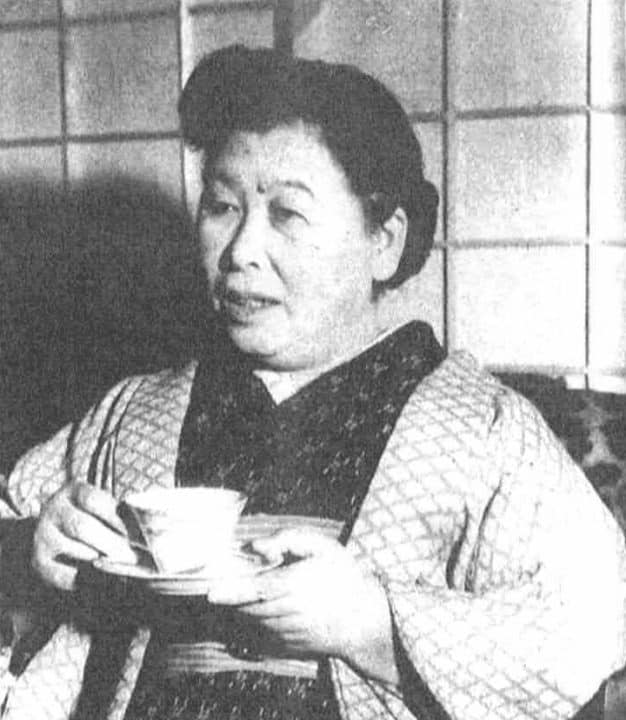
Hanako Muraoka was born into a family without much money, but her father managed to get her accepted into a Christian Missionary School run mainly by Canadian missionaries. There, young Hanako learned to read in English and made her way voraciously through the contents of the school library.
When she left school, she began earning money by writing articles and then translating books. She became aware that Japan had very little literature that was suitable for family enjoyment. One of her early translations was of Mark Twain’s The Prince and the Pauper. She married into a publishing family, and she and her husband experienced the grief of losing their son aged five.
Then war loomed with Japan likely to enter WWII and her missionary friends had to leave and return to Canada. One of those friends handed over a parting gift – a copy of Anne of Green Gables, and Hanako read it and fell in love. She could relate to Anne’s difficult childhood, her resilience, and her decision to postpone university so she could care for Marilla who had adopted her.
However, once war began, books written in English were banned as works by an ‘enemy nation’. Many books by foreigners were publicly burned. It was dangerous for her to work on a translation of such a book throughout the war. She persevered, convinced this was a story that the Japanese would one day need to know, even taking her manuscript into bomb shelters, although well wrapped in cloth so it could not be seen. Somehow the precious manuscript survived the bombings and post-war devastation.
Post-war brought many changes to Japan, including the vote for women. However, publishers were not interested in this book that had first appeared in 1908. Finally, Hanako found one publisher willing to take the risk in 1952. Red-Haired Anne was published (the original title was avoided because the Japanese didn’t know what gables were). It was an instant success and the next few generations read the book at school, heard about it on the radio, and fell in love with the story and its heroine. The book’s message of hope and optimism was just what was needed in Japan at that time.
Hanako went on to translate all the novels in the series, and the three ‘Emily’ books, plus Kilmeny of the Orchard and Jane of Lantern Hill. She became famous in Japan for these works and enjoyed a distinguished public career. She did plan to get to Prince Edward Island, but sadly never made it.
However, many thousands of Japanese tourists have gone there because of the work she did.
I just loved reading this book. I learned a great deal about Japan during a tumultuous period in its history, the struggles of Japanese women to gain the vote, and the education system. I grew very fond of this woman who shared my own passion for books, and I loved learning more about the role of translators and the choices they have to make. If you too are an ‘Anne-fan’, I’m sure you will love this book.
Are you an Anne-fan? What do you know of these novels in Japan? Tell me your thoughts in a comment.
Selected links for relevant websites, books, movies, videos, and more. Some of these links lead to protected content on this website, learn more about that here.
Anne’s Cradle by Eri Muraoka (Author), Cathy Hirano (Translator)
Nimbus Publishing and Vagrant Press: interview with Eri Muraoka and Cathy Hirano
Anne Manuscript: Anne in Twenty-first Century Japan
IMDB: Hanako & Anne
L.M. Montgomery
L.M. Montgomery online
Susannah Fullerton: L.M. Montgomery & Anne of Green Gables video talk
Susannah Fullerton: L.M. Montgomery’s 150th Birthday video talk
Susannah Fullerton: Anne of Green Gables is published
Susannah Fullerton: L.M. Montgomery marries
Susannah Fullerton: Marilla’s Raspberry Cordial
Susannah Fullerton: Film adaptations of the classics
Anne of Green Gables by Lucy Maud Montgomery
Suzanne Canessa
I too love Anna Green Gables but so do mydaughter and granddaughter. At the moment my granddaughter is in Japan so I sent her a small copy screenshot of how they loved Anna Green Gables so maybe she can speak to some of the people in the parts of Japan, she’s going to to see what they think about it.
Susannah Fullerton
It’s always so nice to hear when a love of the Anne books is passed down the generations. I hope she has a great time in Japan and meets fellow Anne fans.
Catherine Wallace
My sister and I inherited some of my mother’s copies of the “Anne books” and I became an fan from an early age. In 2016 I made a long-anticipated pilgrimage to Prince Edward Island. I was astounded to realize that there were large numbers of mature-age Japanese women who were doing the same thing. Eventually I was told that they too were devoted fans. It was explained that it was thought that the theme of rising above adversity would offer hope of better things as Japanese society struggled with many Post War challenges. It is a great joy to know that that a childhood passion is shared across the globe. Catherine Wallace
Susannah Fullerton
Isn’t it just so wonderful visiting PEI when you are an Anne fan! It sounds as if you would also love reading ‘Anne’s Cradle’. I found it absolutely fascinating. The Anne books have really shaped my life, and it’s so lovely knowing that girls in Japan were also hugely influenced.
Carol Noble
I also loved the Anne books. Because I had ginger plaits and freckles I think I identified with her. Every birthday and Christmas my aunts would send me a postal order and I would cash it and buy another Anne book. I am an old lady now but still have the books.
Susannah Fullerton
One can never give away one’s Anne books! I used to long to have red hair so I could be like her. My mother gave me the books and I treasure my collection of all of L M Montgomery’s books to this day.
Graham H.
Anne of Green Gables is certainly a cracker of a novel – for me, it’s the transcendent descriptions of Prince Edward Island scenery, expressed in the lucid and poetic language of the precocious Anne, that work the magic. Google “marigold sky” for example, and you’ll find that L. M. Montgomery coined that evocative pairing almost a century before Daryl Hall and John Oates came along.
My reservation about the book, and my translation dilemma, is the phrase “said Marilla drily”. It’s perfect the first time it appears. But repeated twice, for a total of three copy-cat appearances?? I found it weak, and distracting. Roget’s Thesaurus was written in 1852 and in my view Montgomery should have had time to read it by 1905 when she wrote Anne of Green Gables. Not sure how I’d deal with that, if I could speak Japanese and was translating the novel. Go off-reservation and mix it up with the vocab? or stay true to the original and lazily over-use the same phrase?
As for “hottest love interest in a novel” – my vote would go to Clavdia Chauchat (in Thomas Mann’s The Magic Mountain) – but each to their own, on that very engaging question.