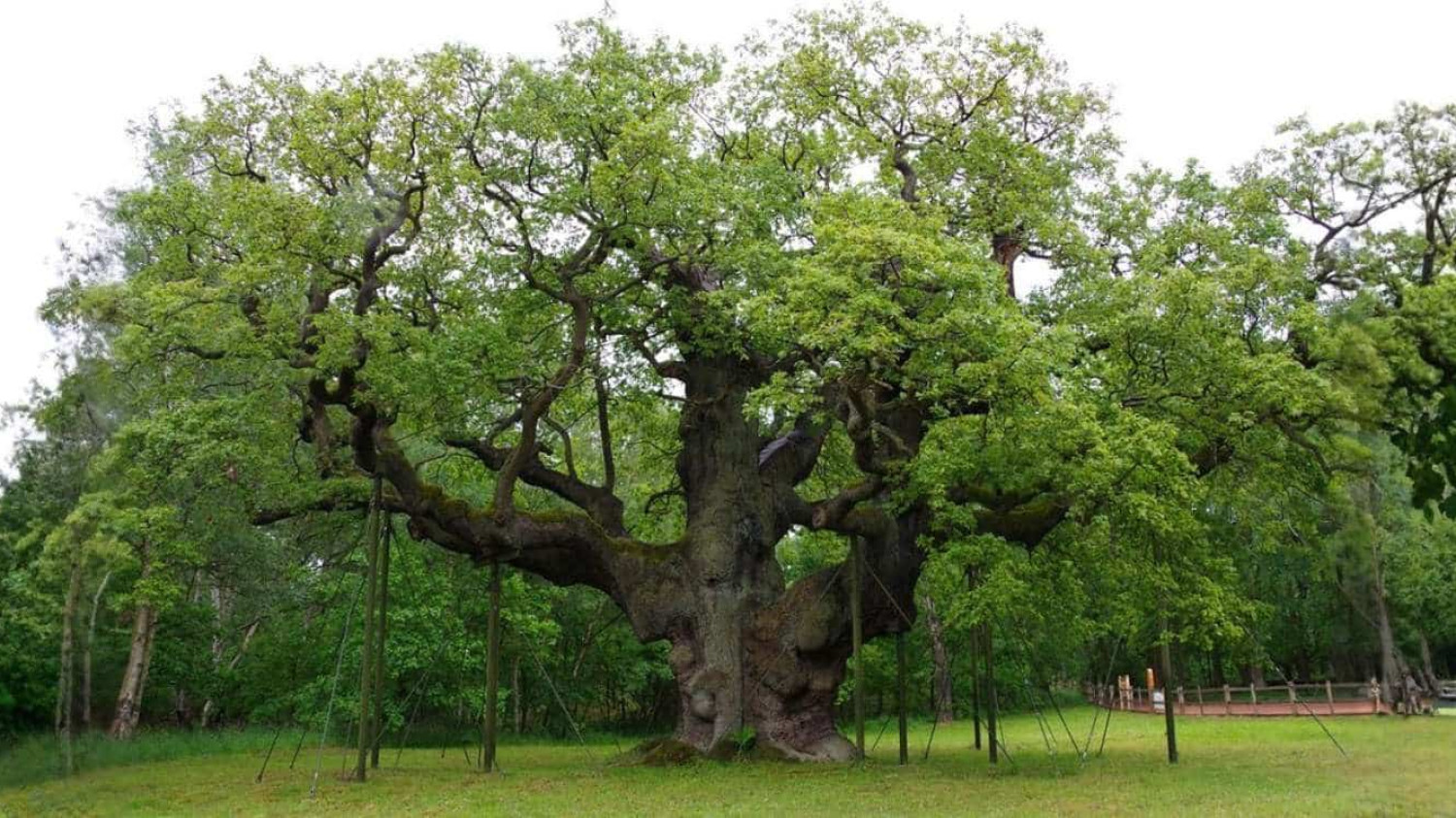
There has been recent news about the death of the Major Oak in Sherwood Forest, Nottinghamshire. The tree has failed to produce any leaves this year, so it has been pronounced dead. Questions have been asked about its demise – was it caused by the stress of long hot summers, changes to the water table due to nearby coal mining, or soil compaction?
The tree shown in the photo above (taken in 2019) is magnificent. Thought to be between 800 and 1200 years old, it has a girth of 10.5 metres and a canopy of 28.5 metres. Originally it was known as the Cockpen Tree, because cockfights were held under its boughs, but in 1790 Major Hayman Rooke, soldier and antiquarian, wrote a book, Description of Sketches of Remarkable Oakes in Welbeck Park, which resulted in its being known as the Major Oak. It is the second largest oak tree in Britain. In 1974, fences were put up around it to protect its root system and to avoid soil compaction from the threat of visitors. Many of its branches have been propped up with supporting poles. In 2002 it was voted Britain’s Favourite Tree.
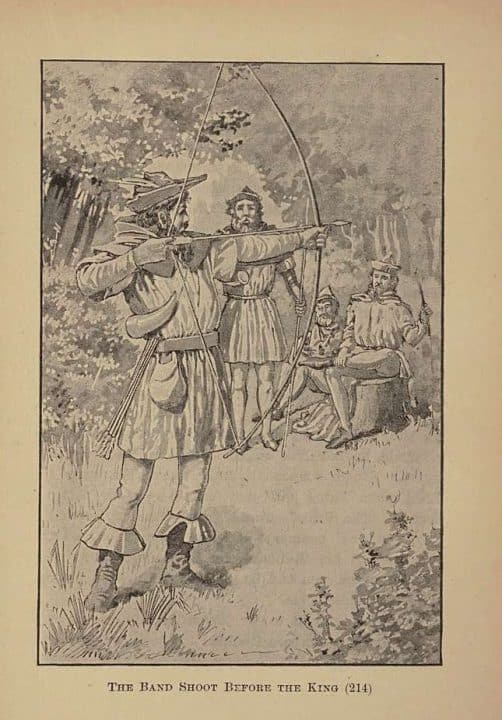
The literary connection is with Robin Hood and his Merry Men, who were said to have often sheltered beneath it. The hollow trunk made an excellent hideout when that dastardly Sheriff came too close.
Robin Hood is said to have married Maid Marion in Sherwood Forest, perhaps beneath this very tree. He is an important figure from British folklore. First mentioned by name in the 14th century, and also mentioned by Shakespeare, Robin has been the hero of ballads, children’s stories, plays, cartoons and films.
How sad that this mighty giant of the forest, and a tree associated with a legendary figure from stories and poems, has sprouted its last leaves. Oaks are amongst my very favourite trees – this one’s death has grieved me and saddened a nation. Tell me your thoughts in a comment.
Selected links for relevant websites, books, movies, videos, and more. Some of these links lead to protected content on this website, learn more about that here.
Valerie Pearson
Hi Susannah Our family made our first return visit to England in summer 1973, over 10 years after my husband, Brian, and I emigrated. While there we were taken by Brian’s brother to Sherwood Forest where we saw the Major Oak. Allan picked up a piece of wood from under the tree , chiselled into a nice shape, carving “Sherwood Forest” on one side and the three children’s names on the reverse. A lovely souvenir we still have today.
Valerie Pearson (from My Colah Probus where you spoke to us a couple of years ago).
Susannah Fullerton
Oh what a lovely story. A memory to treasure. Thanks for sharing it with me. I have never seen the tree, or been into Sherwood Forest, so I loved hearing from someone who ahs.