Leisure by William Henry Davies
What is this life if, full of care,
We have no time to stand and stare.
No time to stand beneath the boughs
And stare as long as sheep or cows. Read more
Leisure by William Henry Davies
What is this life if, full of care,
We have no time to stand and stare.
No time to stand beneath the boughs
And stare as long as sheep or cows. Read more

Frontispiece of Travels with a Donkey in the Cévennes, Robert Louis Stevenson (Chatto & Windus, 1907)
One good book almost invariably leads to another, and another, and another…
Have you read R.L. Stevenson’s Travels with a Donkey about his walking tour in the Cévennes in southern France? It was published in 1879 and is a classic and pioneering work of travel literature. Stevenson designed what sounds like the first ever sleeping bag to take with him, and as well as making a physical journey, he took an emotional one. Read more
When as in silks my Julia goes,
Then, then, methinks, how sweetly flows
That liquefaction of her clothes.
Next, when I cast mine eyes and see
That brave vibration each way free;
O how that glittering taketh me! Read more
According to a World Culture Score Index the country where people read the most is India. Indians, on average, read 10 hours and 42 minutes per person per week. When you consider that there are probably a fair few people in India still unable to read, that means there are people there doing a serious amount of reading. Thailand follows with 9.24 hours per person, then China with 8 hours. Click here to see this data in graphic form. Read more
In 2005 there was a poll in Scotland, asking the Scots to vote for their favourite book. I’d have expected Stevenson’s superb Kidnapped to win, but the winner was Sunset Song by Lewis Grassic Gibbon (whose real name was James Leslie Mitchell), a novel published in 1932. Read more
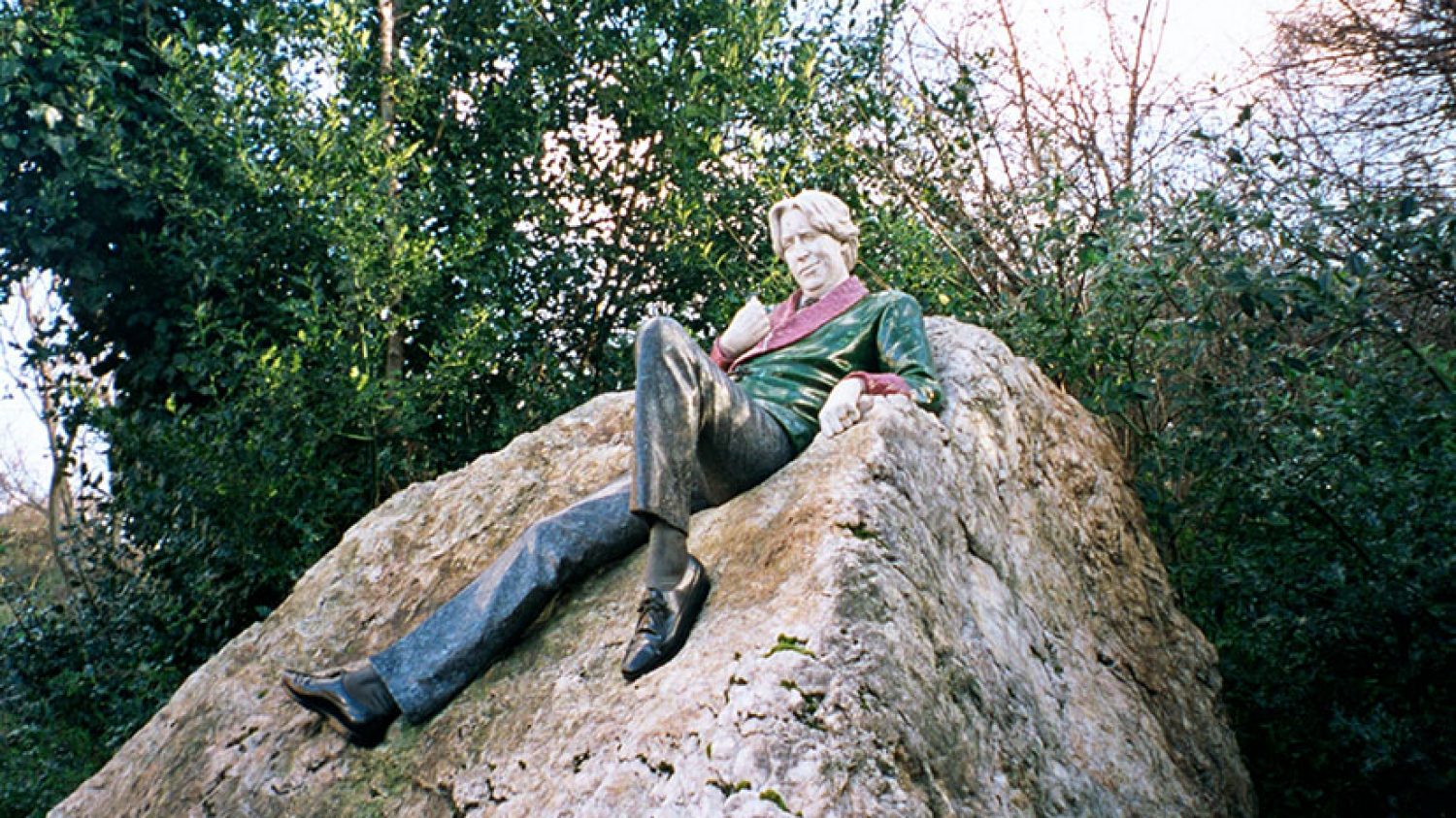
Prisons can sometimes be settings for great literary scenes. Dickens set much of Little Dorrit in the Marshalsea, and part of The Pickwick Papers in the Fleet. Remember Toad of Toad Hall languishing in gaol and being helped to escape by the gaoler’s daughter? Where would The Count of Monte Cristo be without those superb scenes in the Chateau d’If, while Defoe’s Moll Flanders gets to know prisons all too well. But one of the finest prison works of all time must be Oscar Wilde’s The Ballad of Reading Gaol. It was written after he left prison, but describes his time there so poignantly. If you are ever inclined to think capital punishment a good idea, think of his lines
He does not die a death of shame
On a day of dark disgrace,
Nor have a noose about his neck,
Nor a cloth upon his face,
Nor drop feet foremost through the floor
Into an empty place.
Poor Oscar did two years’ hard labour in three different prisons – his health was destroyed, and apart from The Ballad of Reading Gaol, which was published under his prison number C.3.3., he never wrote another work. I wonder how he would feel about the fact that Reading Gaol is about to be opened to the public for the first time this month? Visitors can visit the prison cells, and actors will be performing Wilde’s famous prison letter to Bosie, De Profundis, in the prison chapel. Artists will display works inspired by the prison. Reading Gaol was built in 1844 and remained a working prison until 2013. The exhibition will continue into October.
If you cannot manage to get to the UK to see it, then you can at least read some wonderful books about Oscar. My absolute favourite is Oscar’s Books by Thomas Wright – it’s a biography of the man through his reading, showing what Oscar read at school, at university, what books he collected in his glory days, what books he had access to in prison, and what books were sold off in the bankruptcy sales. I also love Richard Ellmann’s magisterial biography Oscar Wilde, and another fascinating read is a biography of Bosie, the man who caused Oscar’s downfall – Bosie: A Biography of Lord Alfred Douglas by Douglas Murray. Bosie loved to sue people for libel, but ended up in prison himself for libelling Winston Churchill. He was also an accomplished and successful poet. He renounced homosexuality and got married, but it was a stormy relationship and did not last very long. Oscar and his circle are something of an addiction. And there’s a book just published which looks interesting – The Fall of the House of Wilde: Oscar Wilde and his Family by Emer O’Sullivan – which comes highly recommended by Stephen Fry (who acted the role of Oscar in the film Wilde).
What do you think of Oscar Wilde’s works or the books written about the author? Did you see the film version starring Stephen Fry? I’d love to hear from you, please click below to leave your comments.
Selected links for relevant websites, books, movies, videos, and more. Some of these links lead to protected content on this website, learn more about that here.
Susannah Fullerton: The Importance of Being Oscar: The Life and Works of Oscar Wilde
Susannah Fullerton: Oscar Wilde is born
Susannah Fullerton: Oscar Wilde
Susannah Fullerton: Oscar Wilde & Requiescat
Susannah Fullerton: Oscar Wilde marries Constance Lloyd
Susannah Fullerton: Oscar Wilde & Symphony in Yellow
Susannah Fullerton: The Duchess of Padua by Oscar Wilde, premieres
Susannah Fullerton: Oscar Wilde at Reading Gaol
Susannah Fullerton: Oscar Wilde’s final play is first staged
Susannah Fullerton: Cucumber Sandwiches
Susannah Fullerton: John Betjeman & The Arrest of Oscar Wilde at the Cadogan Hotel
Susannah Fullerton: Oscar Wilde dies
Susannah Fullerton: Charles Dickens: The Masterpieces
Little Dorrit by Charles Dickens
The Pickwick Papers by Charles Dickens
The Count of Monte Cristo by Alexandre Dumas
The Fall of the House of Wilde by Emer O’Sullivan
Built of Books, How Reading Defined the Life of Oscar Wilde by Thomas Wright
The University of Adelaide: Oscar Wilde De Profundis
YouTube: Wilde (1997) – Official Trailer
On the 13th September 2016 it was be Roald Dahl’s 100th birthday. His books have sold over 200 million copies worldwide, have been made into movies, been honoured with awards, and Dahl is seen as one of the greatest writers for children in the 20thC. My children all have fond memories of listening to audio cassettes of George’s Marvellous Medicine, while I first read James and the Giant Peach because it was recommended to me as one of the very best read-aloud books for children.
Dahl was born in Wales, but his home in the village of Great Missenden, Buckinghamshire, opened to the public in 2005 and is on my ‘to see’ list of literary places.
Which Roald Dahl books were your children’s favourites? I’d love to hear your thoughts.
Selected links for relevant websites, books, movies, videos, and more. Some of these links lead to protected content on this website, learn more about that here.
I was one of the organisers of the recent Georgette Heyer conference held in Sydney. 160 people attended and the event was a huge success (if I say so myself).
A booklet was commissioned especially for the conference – Georgette Heyer: Complete to a Shade. It has comments about how various contributors first came to read her novels, why they love her books so much, and what influence she has had on their lives. Contributors include Stephen Fry, Heyer biographer Jennifer Kloester, novelists Emma Darwin, Kate Fenton, Eloisa James and many more.
Copies of this beautiful booklet are available to order through my website. It is $19, including postage and packing.
Which Georgette Heyer novel would you recommend to a friend? Tell us below.
PURCHASE print edition – Georgette Heyer: Complete to a Shade
I don’t think any book will ever hold quite the place in my heart that one book does – L.M. Montgomery’s Anne of Green Gables. It is a book I read again and again throughout my childhood, as I read all the Anne books, and continue to re-read as an adult. For me no film version can ever capture the magic of the book. The TV series with Megan Followes began well, and then diverged so wildly from the novels that it just made me cross. So I am very excited to see what sort of job they have made of a new movie version.
Anne is acted by Ella Ballentine, the executive producer is Montgomery’s own granddaughter, and the filming was done on Prince Edward Island.
Release date in Australia was supposed to be June. Did it come and go so fast that I missed it completely? Does anyone know when it will be on Aussie screens?
And on the subject of films, there is to be a new period drama movie about the life of American poet Emily Dickinson. It is called A Quiet Passion and stars Cynthia Nixon as Emily and Jennifer Ehle as her sister Lavinia. A replica of her Amherst home was made as a setting and some scenes were shot in Amherst. It is already getting excellent reviews and will be showing in the UK in November, so hopefully soon after that in Australia.
If you want a truly fascinating read about Emily’s strange life, try Lives like Loaded Guns: Emily Dickinson and her Family’s Feuds by Lyndall Gordon. I was totally riveted by the extraordinary affair between her brother Austin and the luscious Mabel Loomis Todd, and was very convinced by the theory that Emily suffered from epilepsy.
Did you enjoy Anne of Green Gables as much as I did? Or have you already read Lyndall Gordon’s book about Emily Dickinson? Please share your comments below.
Selected links for relevant websites, books, movies, videos, and more. Some of these links lead to protected content on this website, learn more about that here.
Susannah Fullerton: L.M. Montgomery & Anne of Green Gables video talk
Susannah Fullerton: L.M. Montgomery’s 150th Birthday video talk
Susannah Fullerton: L.M. Montgomery marries
Susannah Fullerton: Marilla’s Raspberry Cordial
Susannah Fullerton: Anne’s Cradle
L.M. Montgomery
L.M. Montgomery online
Anne of Green Gables by Lucy Maud Montgomery
Susannah Fullerton: Anne of Green Gables is published
Project Gutenberg: L. M. Montgomery Anne of Green Gables
Librivox: L.M. Montgomery Anne of Green Gables
PURCHASE Google Play: Lyndall Gordon Lives Like Loaded Guns: Emily Dickinson and Her Family’s Feuds
PURCHASE Amazon Kindle: Lyndall Gordon Lives Like Loaded Guns: Emily Dickinson and Her Family’s Feuds
To Althea, from Prison by Richard Lovelace
When Love with unconfinèd wings
Hovers within my Gates,
And my divine Althea brings
To whisper at the Grates;
When I lie tangled in her hair,
And fettered to her eye,
The Gods that wanton in the Air,
Know no such Liberty. Read more

Two women reading on a verandah at Ingham, Qld. ca. 1894-1903
The physical object I love most in the world is a book. I love the smell, the touch of the paper, the amazing promise contained within its pages, the endless variety of covers, and its incredible portability. However, with lots of overseas travel recently, I have found it very convenient to use an e-reader, instead of taking a suitcase of heavy books with me. Generally the e-reader gets put away when I get home and I return to the real thing, but sometimes it comes out again and is used between journeys. Do you have an e-reader? Do you stick to the traditional book, or do you find that, like most people now, you are working out a balance between the two? Read more

John Milton by Unknown artist, oil on canvas, feigned oval, circa 1629
Life seemed a very dark business to John Milton in 1655. His sight, which had been deteriorating for some years (probably as a result of untreated glaucoma) had totally gone, plunging him literally into a world of darkness. He was only 44, and his livelihood was at stake – as secretary in Cromwell’s government, he had to translate official foreign correspondence into Latin, write propaganda and serve as censor. He also wished to record the history happening around him, and write more personal poems as well. All this was seriously threatened by a loss of sight.
As a poet should, Milton sat down to work out his frustrations in verse. The result was …
On his Blindness by John Milton
When I consider how my light is spent
Ere half my days, in this dark world and wide,
And that one Talent which is death to hide,
Lodg’d with me useless, though my Soul more bent
To serve therewith my Maker, and present
My true account, least he returning chide,
Doth God exact day-labour, light deny’d,
I fondly ask; But patience to prevent
That murmur, soon replies, God doth not need
Either man’s work or his own gifts, who best
Bear his milde yoak, they serve him best, his State
Is Kingly. Thousands at his bidding speed
And post o’er Land and Ocean without rest:
They also serve who only stand and waite.
Milton’s famous Petrarchan sonnet was first published in his 1673 volume of Poems. He numbered the poems in the volume, and never gave this one the title by which it is known today (that was given by an editor 100 years later).
The poem is a religious one. Milton refers to the Parable of the Talents from the Gospel of Matthew, exploring the idea that God judges people on whether they work for him to the best of their ability, rather than measuring actual production. Milton struggles to work out what God expects of him now that his sight has gone and he can no longer present “his true account” (ie, his poetry) to God. The first half of the sonnet expresses frustration and bewilderment, a wavering of faith. There is plenty of light/dark imagery, emphasising both the literal and spiritual darkness the poet is enduring.
In the second half of the poem the tone is calmer. Milton has come to see that whatever “yoak” God makes him bear must be accepted with grace and steadiness, and then he will continue serving God. While one door has shut, others will open – Milton soon began to use friends and family as amanuenses, so found he could continue to write poetry after all. He discovers that there are many different ways in which to serve. We all have a place and a purpose in the world, regardless of disability, but patience and acceptance are needed to acknowledge that.

Bravo Tango postcard: Those Who Stand and Wait
The last line of the poem is very famous and often quoted. It was used as a slogan for the Home Front in WWII, appears frequently in the media, and is used for religious purposes and in advice books.
I am not religious and have no desire to serve any god, and yet I have always loved this poem. I think it is because of Milton’s deep sincerity, his anguish at losing his sight and his quest for something that can still give meaning to his relationship with God. It is amazing to think that a few years after writing this poem, Milton began Paradise Lost, his great work, without ever being able to see a word of it written down on a page.
For further reading:
Project Gutenberg: John Milton Paradise Lost
Librivox: John Milton Paradise Lost
Susannah Fullerton: John Milton sells the rights to Paradise Lost